24/7 emergency response · A roofer answers, day or night Serving Austin & nearby Texas towns
Emergency Roof Repair TexasEmergency Roof Repair · Texas

Emergency Roof Repair · Pilot Point, Texas

Emergency Roof Repair in Pilot Point, Texas

A small town by the lake, with older roofs and wind that never really clocks out. When water gets in, it needs stopping tonight, not next week.

Pilot Point sits on the south shore side of Lake Ray Roberts, in Denton County, and its roofs live a particular kind of life: open water on one side, open country on the other, and wind that crosses both without asking. If you are reading this with a bucket under a drip, skip down to the first-hour steps. They are the part that saves your ceiling. If you have a minute to read, this is the emergency roof repair Pilot Point Texas page of Emergency Roof Repair Texas, a repair-first crew. No drama, no sales script. Just the work, in the right order. Call (512) 555-0147 and you will talk to a roofer, not a machine.

Crews who know the lake roads and the old farm roads alike, not a call centre three states away.

  • Photo proof, before and after
  • Small jobs welcome. A repair is a real job
  • Written scope before any work starts
Tell us what is happeningWe call back fast, day or night.
24/7Emergency line, day or night
4Steps in every visit
30 to 90Days a fitted tarp protects
8 ftHow far leak water can travel

Emergency roof repair is the same-day work that stops water getting in after a storm, high wind or a fallen limb: the open spot covered, the leak sealed, the roof made weather-tight until the full repair can be done properly. In Pilot Point it usually means one of three things: wind off the lake has lifted an edge, an old part has finally given up, or a slow leak that hid for months has picked tonight to show itself. Done in the first hours, an emergency roof repair Pilot Point Texas visit is the difference between one bad night and a ruined ceiling, soaked insulation and mould growing where you cannot see it.

The 2 a.m. test

Is this an emergency, or can it wait till morning?

Every caller starts with the same worry, so here is the test our emergency roof repair Pilot Point Texas crews run through on the phone before anyone rolls. If water is actively coming in (through a ceiling, down a wall, anywhere close to lights or wiring) treat it as an emergency and call. If all you have found is a dry mark on the ceiling, no drip, and no rain on the way, morning is soon enough. Pilot Point adds one twist of its own: look at the wind forecast, not only the rain. An edge that sits quiet on a still night can peel open when the lake wind gets up at 3 a.m.

Call now if:

  • Water is dripping or pouring into a room
  • A bulge is forming in the ceiling
  • A tree or a big limb is down on the roof
  • You can see daylight through the roof boards
  • Shingles are scattered in the yard and rain is still coming
  • Water is anywhere near lights, sockets or the breaker box

It can wait till morning if:

  • There is a new stain, but the ceiling is dry
  • A few shingles are down and the sky is clear and calm
  • A slow drip only shows in heavy rain, and a bucket catches it
  • A gutter is overflowing but no water is getting inside

Still not sure? Call (512) 555-0147 and describe what you see. Talking it through settles it faster than staring at the ceiling does.

Do the walk-through the way a crew chief would. One slow lap of the house, eyes on the ceilings rather than the carpet, because water announces itself overhead and high on the walls long before it reaches the floor. In a Pilot Point house, linger in the rooms that face the lake. The wind leans on that side year after year, and edges there wear out ahead of the rest. Look hardest wherever the roof bends or joins, since valleys and seams open up before flat open stretches do. Dry ceilings everywhere and a dry attic hatch mean you can sleep. One wet patch that is spreading means the decision is made, and your next call is an emergency roof repair Pilot Point Texas call, no matter what the clock says.

Grey cases

The grey cases, one by one

Plenty of calls land between those two lists. Below are the in-between cases Pilot Point households describe to us most, and the call our emergency roof repair Pilot Point Texas crews make on each one.
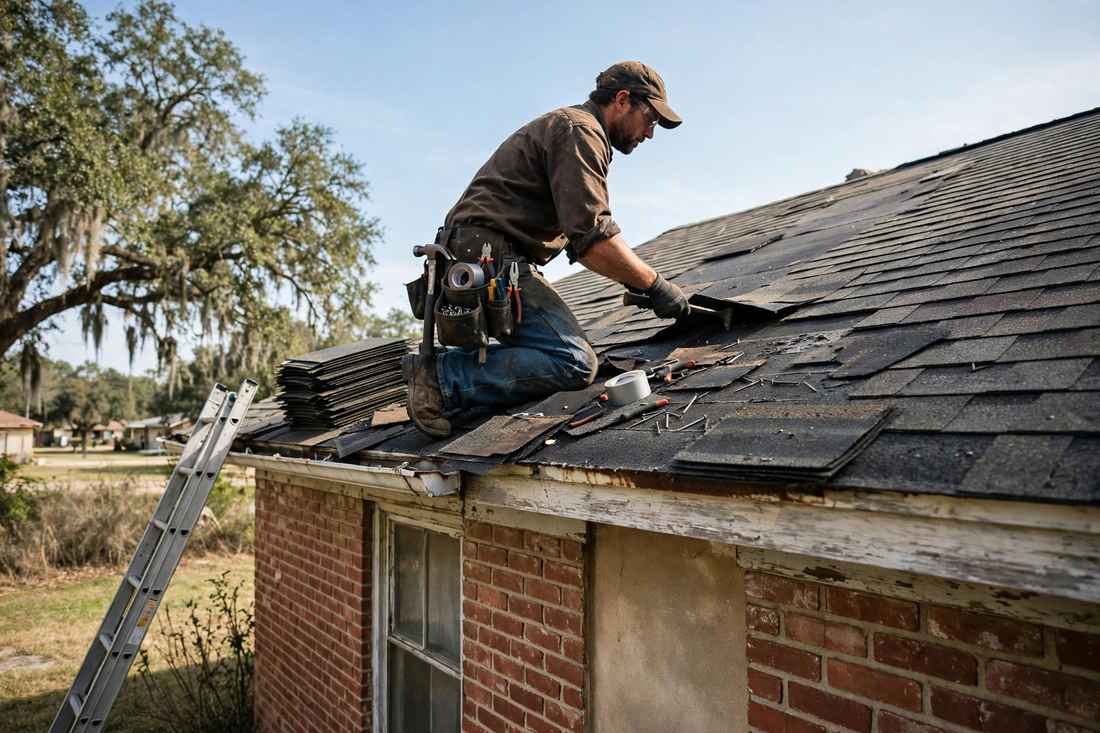
Roofer repairing wind-lifted shingles on a Pilot Point roof
The wind is howling off the lake, but nothing is leaking yet.

Wind noise alone is not an emergency. But if you can hear a shingle slapping or a loose edge banging in time with the gusts, that is a part working itself loose in real time, and it is worth a call. A flapping tab that survives the night still needs a morning visit, because every hour of slapping tears the seal a little more. If the noise stops when the wind drops, note where it came from and tell us in the morning.

A limb from a lakeside tree is resting on the roof, but it has not come through.

Call now. That limb is resting its full weight on decking that might already be split underneath, and one more gust can drive it the rest of the way through. Keep the room below it empty, and leave the limb where it lies. Cutting a loaded limb is skilled work: the wood is under strain, and it can kick hard the moment a saw releases it. Out on the farm roads this matters even more, because the trees grow bigger and the nearest help is farther off.

The drip only shows when the wind blows hard from the lake side.

This one fools people, and it is the most Pilot Point leak there is. A leak that needs hard wind is driven water finding a lifted edge or a tired flashing on the windward slope. If a bucket catches it and the ceiling stays sound, it can wait for morning. But get it traced soon. A leak that only shows in wind is still soaking the boards every time the wind blows, and out here the wind blows a lot.

You found the stain weeks after the rain that caused it.

Common in older homes here, and not a tonight emergency if the ceiling is dry and firm. But do not file it under later and forget it. A stain that appears late usually means the leak is slow and the water is travelling, and slow leaks do quiet damage for months. Book the tracing visit. The section further down this page on hidden leaks explains exactly how that damage grows.

One shingle is missing and the felt under it looks fine.

This can usually wait for a dry morning. The felt is a second skin, and it sheds water for a while on its own. On an older roof, though, the felt may be nearly as old as the shingles, and old felt tears like paper. If the patch is on the lake side of the roof, move it up the list. Wind gets under bare felt faster than rain gets through it.

Water is coming through a light fitting.

Call now, but switch that circuit off at the breaker before you do anything else. In this one case the wiring outranks the roof. Water running through a live fitting can shock someone or start a fire, and a stained ceiling is a small thing next to either. Town house or farmhouse out past the lake roads, the order stays the same: power first, roof second.

The house sat empty for a while, and you found the damage on a visit.

Lake-area homes and family places sometimes sit quiet between visits, and a leak in an empty house runs for weeks with nobody watching. If you walk in to a stained ceiling, a musty smell and a floor that has taken water, treat it as urgent even on a dry day. The roof may only leak in rain, but the inside of the house has been wet the whole time. Air the place out, move what you can off the wet floor, and call for a tracing visit before the next rain adds to it.
First-hour manual

The first hour: what to do while you wait

Help is coming. What you do in the meantime decides how much of the damage stays small, because on most emergency roof repair Pilot Point Texas jobs the expensive harm happens inside the house during this wait, not up on the roof. Seven things, in this order:

1Kill the power if water is near lights or sockets.

Electricity is the one part of a leak that can hurt someone. When water starts coming through a light fitting, kill that circuit at the breaker box before anything else gets touched. Never wade through standing water to reach the box. If the only path crosses a wet floor, leave the switch alone, get everybody out of the room, and wait for the crew.

2Catch the water.

Catch the drip in a bucket, ring it with towels, and drag furniture and rugs out of the splash zone. Lay a folded towel in the bottom of the bucket before the first drop falls: it swallows the plinking noise that would keep the whole house awake till morning.

3Deal with a bulging ceiling the right way.

A ceiling that bows downward is carrying water. The plaster has a puddle sitting on top of it, and the weight grows with every minute the leak runs. A small, tight bulge can be let down on purpose while you wait: set a bucket under its lowest point, push one small hole through with a screwdriver, and let the water leave in a thin stream you are in charge of. A wide bulge is a different animal. If the ceiling is sagging across a broad area, or cracks are crawling outward from it, hands off. Keep everyone, pets included, out of that room. Plaster that is about to drop needs nobody standing under it. Reading the difference, small bulge against wide sag, is what separates a ceiling you drained from a ceiling that fell.

4Stay off the roof.

Stay off the roof tonight. Wet shingles give boots no grip, a cracked board can drop you without warning, and a tarp is treacherous even bone dry. Older roofs add one more trap: brittle tabs that snap underfoot and start a slide. Nothing up there is worth the fall. The work that counts this hour happens indoors. Morning will find the roof right where it was, and you in one piece.

5Take photos of everything.

Photograph the stain and the drip, the limb where it fell, the shingles scattered across the yard. Shoot from the street and from inside the rooms. Catch the bulge in the ceiling before you drain it, and the bucket standing under it. Pictures from tonight settle arguments tomorrow, whatever you choose to do next. They save the crew time as well: a shot of the exact drip spot shortens the attic search, and a shot of the yard shows what the wind carried off before anyone climbs up.

6Move what water ruins.

Get electronics, paperwork and anything cloth up off the floor and away from the wet area. A cardboard box that has been sitting in water is already gone; rescue what is inside it instead. Pull curtains back from a damp wall. Leave a soaked cupboard's doors open so air gets in. And if the house has stood empty for a while, look inside the closets too. Rooms nobody uses can hide a wet floor for a long time.

7Call a roofer, not a handyman.

(512) 555-0147. A roof letting water in needs roofing hands: tarping gear, proper ladders, and an eye trained to find where the water is really getting in. In a small town the temptation is to call whoever is nearest with a ladder. Nearest is fine for a fence. A leaking roof wants the tracing habit, and that is a roofer's habit.

The attic can wait, too. Nobody needs to play hero up there in the dark. If your home has boards laid down to stand on and you have a decent flashlight, one short look from the hatch, thirty seconds at most, can show you which slope the water is entering from, and that is genuinely useful to pass on. In plenty of Pilot Point houses the hatch sits in a hallway or the garage, which makes that quick look easy. But if the space is tight, black or already wet, leave it shut. A fact about a leak is never worth a foot through the ceiling. Reading the attic is the crew's job when they get there, and it is part of every emergency roof repair Pilot Point Texas call we make.

How we work

How a Pilot Point call runs

Every call to our emergency roof repair Pilot Point Texas line runs the same four steps, whether it is one torn shingle on a street in town or a barn roof out on the county roads:

1Stop the water.

Repair can wait an hour. Rain cannot. The first thing we do is shut the weather out: cover the damage, seal it, and leave the roof tight enough that the house stops taking water. On a night call that might be a tarp set properly in the dark, battens included, or a patch sealed over the open spot. We judge it one way: step back and check that nothing is still getting in.

2Make it safe.

First, the roof gets made safe to stand on. Anything loose comes off, and nobody sets foot under a damaged section. A limb hanging over the slope is either secured or left completely alone until it can come down properly. Cracked boards get marked so no boot lands on them. On an older roof this takes longer, because brittle shingles and soft deck spots punish hurried feet. From the yard it looks slow. It is what makes the fast work after it possible.

3Show you the proof.

You get photos of the part that failed and of the work done over it, talked through in plain language before we leave. The split boot, the raised flashing, the hole the limb punched, the cover now sitting on top: you see each one. Anything too awkward to photograph comes down the ladder and gets shown to you in hand. On an emergency roof repair Pilot Point Texas visit, proof is not a bonus. It is part of the work itself.

4Do the permanent repair.

The lasting repair comes once the roof has dried out and been gone over properly. It is set down as a written scope before a single tool comes out, so you know the parts, the tasks and the running order ahead of time. If drying the roof out exposes damage the night visit could not show, and older roofs hide plenty, the scope grows only with photos attached, before that extra work starts.

The order of a visit is fixed for a reason. Go straight to patching and skip the evidence, and a crew hands back a dry house with nothing to prove what was wrong. Open with a sales pitch, and you are left standing in the rain. So the running order never changes: water stopped first, hazards made safe, proof put in front of you, then the repair. Book an emergency roof repair Pilot Point Texas visit and that is exactly what you get, every time.

Our promise

The Repair-First Promise

Most emergency roof repair Pilot Point Texas calls finish with a repair. A new roof is the rare ending, and we prefer it that way. When a patch and fresh sealant on the flashing will hold, that is the fix we put in front of you, photos included, so the call is yours to make. We do not dress small damage up as a disaster. And when a roof really has reached the end of its life, the pictures make that plain without any sales talk from us. Nobody here will put you on a clock.

Put plainly, repair-first looks like this. One failed part sits behind most single leaks: a split pipe boot, a flashing joint that has opened, a handful of shingles a storm tore loose. The fix that matches is often inches wide, not a whole slope. When a crew leaps from one cracked boot to a brand-new roof, nothing in the roof changed size. The plan did. Our emergency roof repair Pilot Point Texas crews work the opposite way: the smallest repair that will genuinely hold is the one we recommend, and the photos have to back that up.

Repair-first cuts both ways. When a roof has reached the point where patching stops being honest, we say so plainly. Plenty of older Pilot Point roofs sit right on that edge, with shingles brittle on slope after slope and old patches stacked over older ones. A roof in that shape swallows repair after repair and still lets water in when the next storm season rolls around. Three callouts for one problem is not thrift. So we lay out what we found, one slope at a time, and the decision stays with you, with no clock running on it. The photos and the findings will read the same next week as they do tonight.

Lake Ray Roberts wind

What the lake wind does to a roof, season after season

Every town has a weather pattern that writes its roof repairs. In Pilot Point it is the wind off Lake Ray Roberts. The lake is a wide, flat stretch of open water, and wind crossing open water arrives with nothing to slow it down: no tree lines, no rows of houses, no hills worth the name. By the time it reaches the roofs on the lake side of town, it is moving fast and it is gusty, and gusts are what roofs feel. A steady wind pushes. A gusting wind grabs, lifts, lets go, and grabs again. That grab and release, repeated for years, is the quiet engine behind most emergency roof repair Pilot Point Texas calls we take here. It is also why so many of those calls start at an edge, and why an emergency roof repair Pilot Point Texas check in this town always starts at the edges and works in.

It starts at the edges

A roof almost never fails in the middle first. Wind gets its fingers under the edges: the eaves, the rake edges on the gable ends, the ridge cap along the top, and the corners where two edges meet. Each gust lifts an edge a fraction. The shingle bends up, the seal under it stretches, and when the gust passes the shingle settles back down. Do that ten thousand times across ten windy seasons and the seal gives up. The tab still looks fine from the street. It just is not stuck down anymore. The next hard gust does not bend it. It folds it back or takes it off, and now the roof has an open door exactly where the wind knows how to find it.

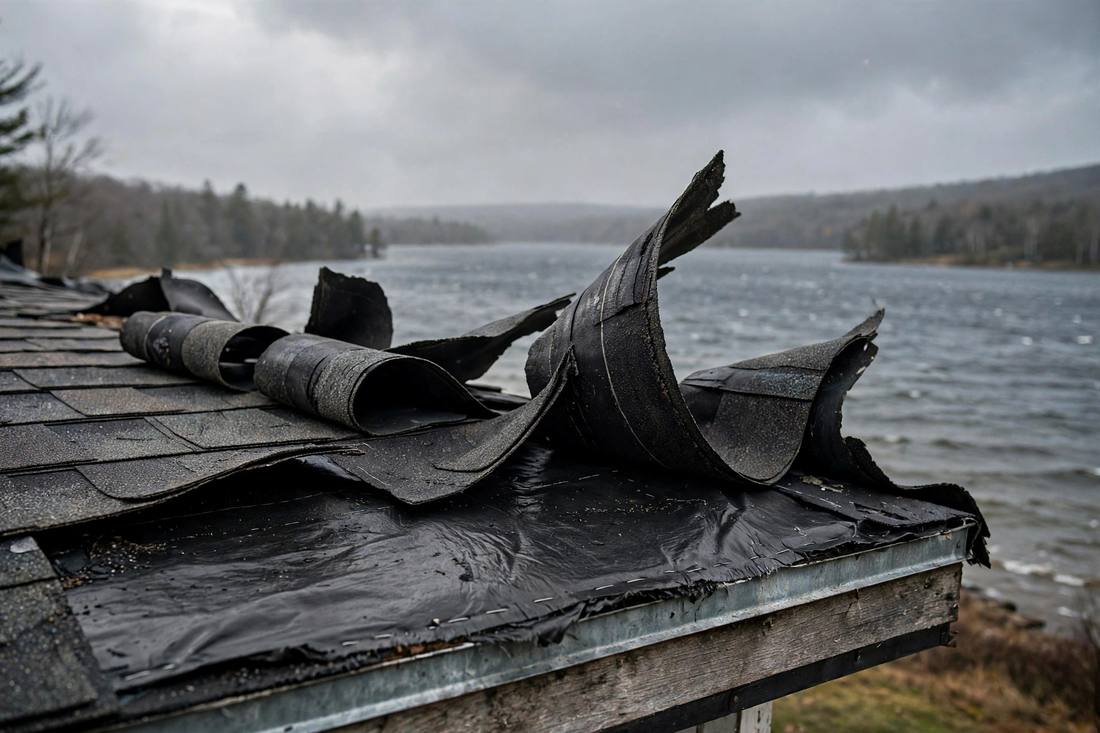
Shingles lifted by lake wind at the edge of a Pilot Point roof

Driven rain rides the same wind

Wind off the lake rarely travels alone. In a storm it carries rain sideways, and sideways rain is a different test from falling rain. Falling rain runs down the laps the way the roof was built to shed it. Driven rain climbs. It pushes up under shingle laps, into the joints of flashing, and through gaps that a calm rain would never find. This is why so many Pilot Point leaks only show in wind-driven storms and hide through a dozen soft rains. The roof is not being mysterious. It is being tested from a direction it was only partly built for. When a caller tells us the leak needs wind, that single fact tells our emergency roof repair Pilot Point Texas crews which slope to start on and which edges to lift first.

The windward slope ages faster

On most Pilot Point homes, one slope takes the weather and the others mostly watch. The slope facing the lake and the open country gets the gusts, the driven rain and the flying grit, and it ages years ahead of the sheltered slope behind it. Granules wear faster there. Seals let go sooner there. When a roof is checked slope by slope, the windward side often reads like an older roof than the rest of the house, because in working terms it is. This matters for honest repair talk: a tired windward slope does not make the whole roof tired, and replacing sheltered slopes that still have years in them helps nobody but the seller. Our emergency roof repair Pilot Point Texas checks grade each slope on its own evidence.

What you can watch from the ground

You never need to climb to read the wind story on your own roof. After a windy night, walk the yard. Shingle tabs and grit in the grass on the lake side tell you the wind was working up there. Look at the edges from the street with the light behind you: a lifted corner throws a shadow line that a sealed edge does not. Listen during the next blow. A rhythmic slapping that matches the gusts is a loose part announcing itself, and it will not heal. Note which side the sounds and the debris come from, and tell us. That one detail, the windward side, cuts the attic search in half on an emergency roof repair Pilot Point Texas visit.

Why tarping here has to respect the wind

A cover fitted in Pilot Point has to survive the same wind that made the hole. A loose edge on a tarp is a handle, and lake wind finds handles fast. That is why our tarps are battened down with boards along the edges, not just weighted or nailed at the corners, and why the cover is checked from the ground after the next blow. The full method lives on our tarping page. The short version is simple: in this town, the fitting is the repair. A cover that flaps is a cover that is leaving. That is why an emergency roof repair Pilot Point Texas tarp is fitted like it has to survive the month, not just the night.

Older roofs

Old roofs fail differently: a plain guide for Pilot Point homes

A lot of Pilot Point's housing has been standing a long while, and so have the roofs on it. That is not a criticism. An old roof that has been patched with care can outlast a young roof that was thrown on in a hurry. But age changes what fails, how it fails, and what an honest repair looks like. Most emergency roof repair Pilot Point Texas calls on older homes trace back to one of the patterns below, and knowing them helps you read your own roof before it reads you a lesson at 2 a.m.

Brittle shingles

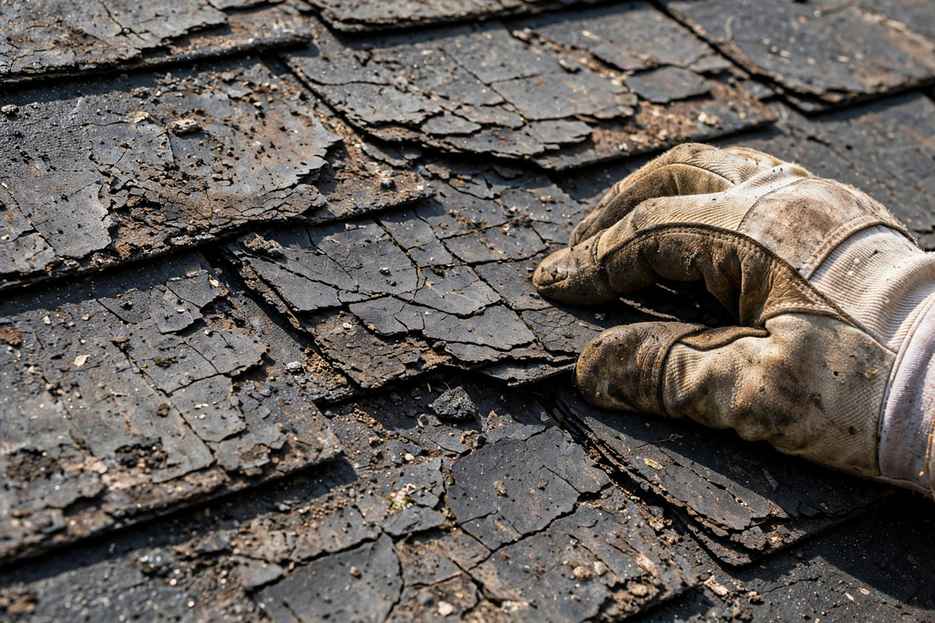
Shingles age by losing the oils that keep them flexible. Sun and attic heat bake those oils out year by year, and the granule coat that shields the asphalt wears thin. An old shingle does not bend. It cracks. You can hear it in a hail check and feel it in a repair: a tab that would flex on a young roof snaps like a cracker on an old one. Brittleness changes repair work in two ways. First, the shingles around a repair spot are as fragile as the failed one, so the repair has to be planned wider and handled gently, lifting and resealing neighbours without breaking them. Second, some roofs reach the point where touching one spot breaks the next, and at that point patching stops being a repair and becomes a slow demolition. A straight crew will show you that point with photos, not adjectives, and that is exactly what our emergency roof repair Pilot Point Texas crews are told to do.

Granule loss and the quiet thinning

Granules are the gritty coat that keeps sun off the asphalt. They shed slowly all a roof's life, and faster after hail and hard weather. A handful in the gutters is normal. Gutters that fill with grit season after season, and downspout splashes that run dark with it, mean the coat is going. Bare asphalt ages in months where granules would have protected it for years, so a thinning roof ages faster and faster, like a bald spot spreading. You can check from the ground: look for slopes that have gone dull and patchy against the colour of the sheltered side, and bare dark spots where the grit has washed away. It is not a tonight problem. It is the clock the roof is on, and it decides whether the next leak deserves a patch or a bigger conversation. An emergency roof repair Pilot Point Texas check reads that clock honestly, slope by slope, and shows you the reading.

Old brittle shingles checked by hand on a Pilot Point roof

Old flashing, the usual suspect

If shingles are the roof's coat, flashing is the stitching: the metal strips that seal every joint where the roof meets a wall, a chimney, a vent or another slope. Flashing fails old before shingles fail young. The metal rusts at the folds, the sealant over it dries and cracks, and the nails that hold it work loose as the wood under them swells and shrinks across the seasons. Most leaks on older Pilot Point homes begin at a joint, not in a field, which is why the leak section below spends so much time on tracing. Replacing a run of tired flashing is one of the most honest repairs in the trade: small parts, real skill, and a leak that stays gone. When an emergency roof repair Pilot Point Texas visit finds flashing at fault, the fix is measured in feet, not in slopes.

Layered roofs, told plainly

Some older homes carry two layers of shingles: a new layer laid over the old one instead of tearing the old one off. It was a common way to save a hard week of work, and plenty of those roofs are still up there doing their job. But a layered roof changes emergency work. The top layer hides the true state of the one under it. A soft spot may be rot in the buried layer or in the deck itself, and you cannot tell from above. Repairs sit thicker and seal slower, and a leak's trail runs between layers in ways that make tracing harder. None of this means a layered roof must come off tomorrow. It means an honest crew names it when they find it, shows you the edge where the layers show, and writes the scope with the layers in mind. If your home has two layers and a crew talks as if it has one, that crew has not looked at your roof yet. When an emergency roof repair Pilot Point Texas scope is written for a layered roof, it says which layer failed and what that means for the fix.

Nail pops, lifted tabs and small betrayals

Old roofs also fail in small change. Nails back out of aging deck wood a fraction at a time until the head lifts the shingle above it, and that little tent is a door for driven rain. Sealant dabs from repairs long past dry out and pop off. A vent boot's rubber collar, baked by twenty summers, splits around the pipe it was meant to hug. Each of these is a small fix on its own. Together they are why an older roof can leak in three places in one storm while a young roof on the same street stays dry. The good news is that small betrayals are cheap to forgive when they are caught in a check. The bad news is they hide: from the street, a popped nail and a split collar are invisible. They are found by hands and eyes on the roof, which is what a check is for, and they are the bread and butter of emergency roof repair Pilot Point Texas work on homes of this age.

The deck under it all

Under every shingle sits the deck, the boards or panels the roof is nailed to. Decks age quietly. A slow leak can soften a patch of deck for years while the shingles above look ordinary, and the first sign is a spongy feel underfoot on the roof or a dip you can see along a slope in low light. Soft deck matters because nails need sound wood to hold. A repair nailed into soft deck is a repair with a short life, and an honest scope says so and includes the deck patch. It also matters for safety: our crews walk older roofs like they are reading them with their feet, because they are. A soft spot found by a careful boot in daylight is a fact. The same spot found by a homeowner's boot at midnight is a fall. It is also why an emergency roof repair Pilot Point Texas crew walks an old roof slowly, reading it with their feet as they go.

Hidden leaks

Leaking roof repair in Pilot Point, Texas: the leak that hides for months

Here is the thing nobody tells you until the second failed fix: the wet patch on your ceiling is almost never under the hole. Water gets in at a high point: a cracked pipe boot, a lifted flashing, a valley that has opened up. Then it runs along the boards, sometimes eight feet or more, before it finds a seam and drips through. In Pilot Point that simple fact has a local twist. Because so many roofs here are older, and because the wind keeps testing the same edges, the classic local call is not a dramatic drip. It is a stain that was not there in spring, in a house where nobody remembers a storm. Leaking roof repair Pilot Point Texas work, done right, is mostly detective work, and this section is the detective's notebook.

Why leaks here hide so well

A young roof leaks loudly: a torn slope, an open seam, a drip the same night. An older roof leaks in whispers. The entry is small: a split boot collar, a flashing joint open a quarter inch, a nail head tenting a brittle tab. The water that gets in is a trickle, not a stream, and a trickle does not drip through a ceiling. It soaks. It wets the deck, darkens the insulation, and dries again between rains, leaving a little more damage each time. Months of that cycle can pass before the ceiling below finally shows a stain, and by then the stain is the end of a long story, not the start of one. This is why our emergency roof repair Pilot Point Texas crews treat a new stain on an old roof as a tracing job first and a repair job second. Seal the stain's neighbourhood without finding the entry and you have decorated the problem.

The attic tells the truth

The tracing starts in the attic, because the attic keeps the records. The signs are plain once you know them: dark streaks running down the boards from above the stain, nail tips gone rusty where water passes them on its way down, insulation that is flat and dark where it has been wet again and again. There is a smell, too: sweet and musty, different from plain hot attic air. The highest wet mark is the one that matters. Water only runs down, so the trail always points up, back toward the entry. In Pilot Point homes the trail so often starts on the lake side, at a boot or a flashing the wind has been worrying for years, that our crews check that side's penetrations before they check anything else. Leaking roof repair Pilot Point Texas calls are won or lost in this half hour of looking. The sealing afterwards is the easy part. The emergency roof repair Pilot Point Texas repair that follows is only ever as good as this looking.

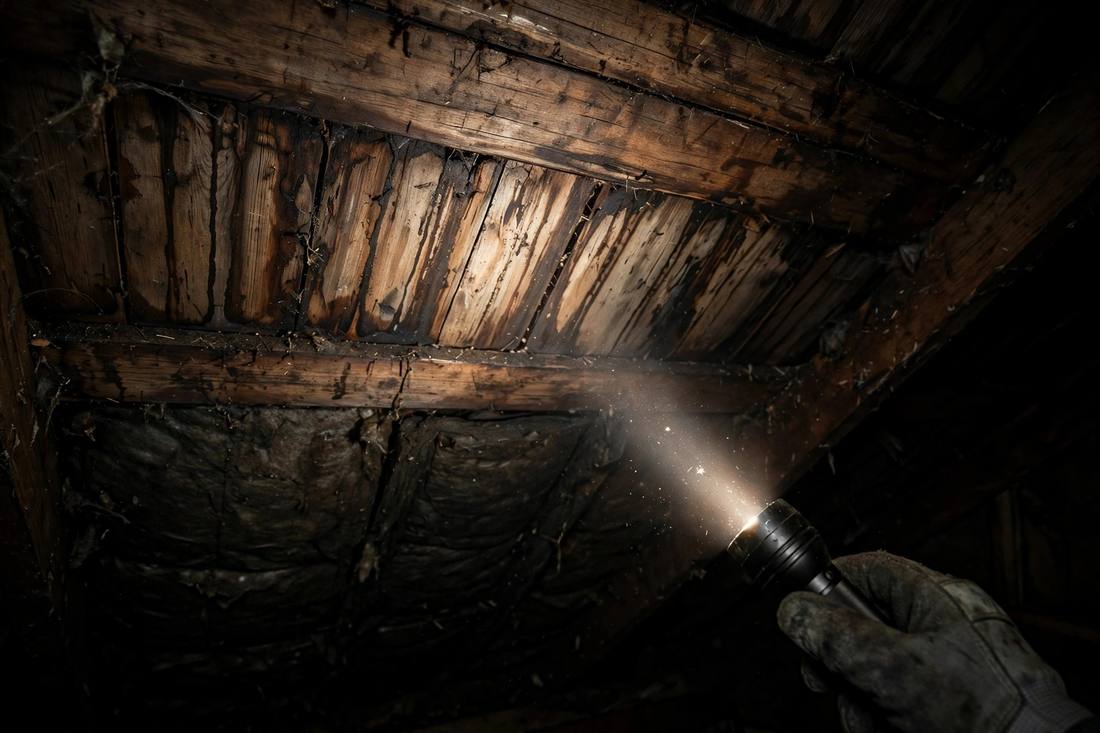
Tracing a hidden leak trail in a Pilot Point attic by torchlight

The timing is a clue, too

Callers tell us more than they know when they describe when a leak shows. A leak that only appears in hard, wind-driven rain points at an edge or a flashing that only fails when water is deep and pushed sideways. A leak that shows hours after the rain stops is water that travelled a long way through the roof before it dropped, which fits the hidden pattern on older roofs here. A stain that grows in dry weeks is not roof water at all some of the time: it can be a plumbing line or an air-conditioning drain in the attic, and a good crew says so when the evidence points that way. Our emergency roof repair Pilot Point Texas crews ask about the timing before anyone climbs, because the pattern cuts the search in half.

The hose test ends the guessing

If the trail in the attic is too faint to follow, the hose test gives the answer. One of the crew stays below with a torch, eyes on the trail, while the other works a hose across the roof in small sections, low ones first, a few minutes on each. The instant water appears inside, the section under the hose is where it gets in. It is slow, soaking work, but it ends the argument. It also takes two people, daylight, a dry roof and a ladder that is properly footed, which is why it is crew work and not a midnight job for a homeowner. On a roof repair Pilot Point Texas leak visit, tracing done this way turns a vague "somewhere above the bedroom" into "this boot, this joint, sorted". Every emergency roof repair Pilot Point Texas leak call is held to that standard.

What months of quiet water actually do

Left alone, a hidden leak spends its time on three things. It rots the deck around the entry, softening the wood the roof is nailed to. It soaks insulation flat, and flat insulation stops insulating, so the room below runs hotter in summer and colder in winter for reasons nobody connects to the roof. And it feeds mould in the dark, damp space between ceiling and roof, which is why some homes develop a musty room that no cleaning fixes. None of this needs a flood. A teacup of water per rain, arriving for a year, does all of it. The hopeful part is real, too: caught at the stain stage, the repair is usually the small one, a boot, a flashing run, a deck patch the size of a tray. Caught at the sagging-ceiling stage, it is carpentry. The difference between those two bills of work is nothing but time, which is why this page keeps saying the same thing in different words: a new stain on an old roof deserves a tracing visit soon, not a coat of paint and a hope. An emergency roof repair Pilot Point Texas tracing visit at the stain stage is how a roof stays in the small repair column.

Paint is not a repair

One warning, because we see it every season: painting over a ceiling stain hides the only gauge you have. A stain that is drying out will stop growing and turn dusty at the edges. A stain that grows, darkens or returns with the next rain means water is still arriving, and that is a call-back, not a paint job. If you want the mark gone, give it a few rains first. A dry stain that survives three good storms is a stain you can paint. Until then, leave it visible. It is reporting for duty. If it keeps reporting, call the emergency roof repair Pilot Point Texas line and let the attic settle the question.

North Texas storms

Storms around Pilot Point: the pattern, in plain terms

Pilot Point shares the north Texas storm pattern: spring lines that roll in fast, summer pop-up storms that build over the lake country in the heat of the afternoon, and the odd hard autumn blow when the seasons change. Nobody can hand you a count of what your street will see, and any crew that hands you a statistic for this town is making it up. What can be said honestly is how the pattern behaves, and what it does to roofs like the ones here. That is what our emergency roof repair Pilot Point Texas crews plan around, season by season.

Spring: the main season

Spring is when north Texas roofs earn their keep. Cold air and warm Gulf air take turns over Denton County, and the meeting makes lines of storms that can carry hail, hard wind and sideways rain in the same hour. For an older roof, spring is the audit it did not ask for: brittle tabs meet hail, tired seals meet gusts, and flashing that was merely old in February is leaking by April. The sensible spring habit is a check after the first big line passes, while any bruising and lifting is fresh and easy to date. Our storm page covers the full check, slope by slope, and what a counted hail inspection looks like. That counted check is the core of spring emergency roof repair Pilot Point Texas work.

Summer: heat, pop-ups and tired seals

Summer storms here are shorter and ruder: a dark build-up in the afternoon, twenty loud minutes, then steam off the roads. The rain in a pop-up can be heavy enough to find every weak joint on the roof at once, and it arrives on a roof that has spent the day baking. Heat is the summer story even without storms. Attic heat ages shingles from below while the sun ages them from above, sealant dries and cracks, and the rubber on vent boots gives up its flexibility. A lot of emergency roof repair Pilot Point Texas calls in August are really spring damage and summer heat arriving at the same address on the same night.

After any storm: the ground check

Whatever the season, the morning after a storm belongs to a slow walk. Look for shingles and grit in the yard, and note which side they are on. Look up at the edges and the ridge from the street. Check the ceilings, then the attic hatch if it is safe and easy. Listen on the next windy day for slapping. None of this takes ten minutes, and it turns a vague worry into a list you can read to us on the phone. If the walk finds damage, our storm damage page explains what a proper check covers. If it finds a drip, you are already on the right page: call (512) 555-0147 and describe what you see.

Services

What we fix in Pilot Point

Emergency roof repair Pilot Point Texas jobs arrive in a handful of shapes. The order of work never changes: stop the water first, repair second. These are the services behind this page, each with its own page of its own.

Storm Damage Roof Repair

Wind, hail and limbs on the ground. We check the whole roof, ridge down to gutters, before anything gets fixed. A storm works differently from a leak: it tests all the slopes in the same hour, lifting edges on the lake side, bruising shingles on another face, dropping a limb at the back. The inspection has to cover the same ground, or whatever was missed waits for the next storm to announce it. After a lake storm, this is the emergency roof repair Pilot Point Texas call that gets the recovery started.

Emergency Roof Tarping

A tarp fitted the way it should be: flat, tight and battened down, so it holds until the repair instead of shredding in the next lake wind. Fitted well, a tarp is a real bridge: about 30 to 90 days of cover while the lasting repair is booked and the roof dries. In this town the fitting matters double, because the same wind that made the hole will test the cover within the week.

Roof Leak Repair

Tracing first, sealing second, so the same drip does not come back next storm. A leak repair that skips the tracing is a guess with a sealant gun. Ours starts in the attic, follows the water up to its entry, and fixes that one point for good. On Pilot Point's older roofs this is the service that matters most, because the leaks here hide. It is the emergency roof repair Pilot Point Texas service this town needs most often.

Roof Repair

Not every repair is an emergency. Boots, flashing, lifted tabs, small storm tears: the everyday repair list has its own page, covering how a repair is scoped, what a sound fix looks like on shingle and metal, and when a repair stops being the honest answer.

Roof Inspection

A check you can read: every slope walked, damage chalked and counted, the attic read, and photos handed over with the findings in plain words. After a spring storm line, or before you decide anything big about an older roof, this is the visit that turns worry into facts. Every emergency roof repair Pilot Point Texas decision worth making starts with facts like these.

Repair or Replace?

The honest version of the hardest question in roofing. Slope-by-slope evidence, the state of the deck and the flashing, and the maths of patching a roof that keeps asking. No countdown, no pressure: the page lays out how the call gets made, and our crews make it the same way at your kitchen table.

Hail Damage Roof Repair

Hail bruises shingles from the inside, and the damage shows up weeks later as lost grit and early wear. The hail page covers what a hit does to the mat inside a shingle, how a counted inspection works, and what repair looks like when the bruising is real.

Roof Replacement

When a roof truly is worn out, replacement done in the right order is its own service: tear-off, deck check, new flashing throughout, and a roof built for lake wind. It is the last resort on our list on purpose. Repair comes first here, and replacement is recommended only when the evidence leaves no honest alternative. It sits inside the same emergency roof repair Pilot Point Texas promise: evidence first, pressure never.

Not sure which one you need? That is normal, and it is not your job to know. Most callers describe a sound, a stain or a drip, and that is enough. One call sorts it out: (512) 555-0147. You describe what you see, we tell you honestly which shape it is, and whether it needs a crew tonight or a booking in the morning. The full list, with the guide to what counts as an emergency, lives on our services page and in the emergency guide. If you can, have your photos ready when you call. A shot of the ceiling stain, the drip and anything lying in the yard tells the crew what to load before they roll.

Outbuildings

Barns, sheds and workshops: the other roofs of Pilot Point

Town is only half the map here. Around Pilot Point, a lot of life happens under outbuilding roofs: barns, equipment sheds, workshops, hay covers and the odd old farmhouse roof still doing duty over a storage room. Those roofs are most often metal, they are worked hard, and they are easy to forget until the day the drip lands on something that matters. An emergency roof repair Pilot Point Texas call out on the county roads often turns out to be two calls in one: the house, and the barn behind it.

Metal roofs age at the screws and seams

A metal roof does not wear out the way shingles do. The panels last. What ages is everything that joins them: the screws, the seams and the sealant in between. Heat cycles work screws loose a hair at a time until the rubber washer under the head cracks and the hole around the shaft starts taking water. Seams open as panels shift. The first sign is usually a slow drip that only shows in driven rain, or rust freckles around the fastener rows. The fix is patient work: back out the tired screws, fit new ones with sound washers, reseal the seams, and check the rows in order rather than dabbing at the one drip you found. Dabbing is how a barn roof ends up with forty sealant blobs and the same leak.

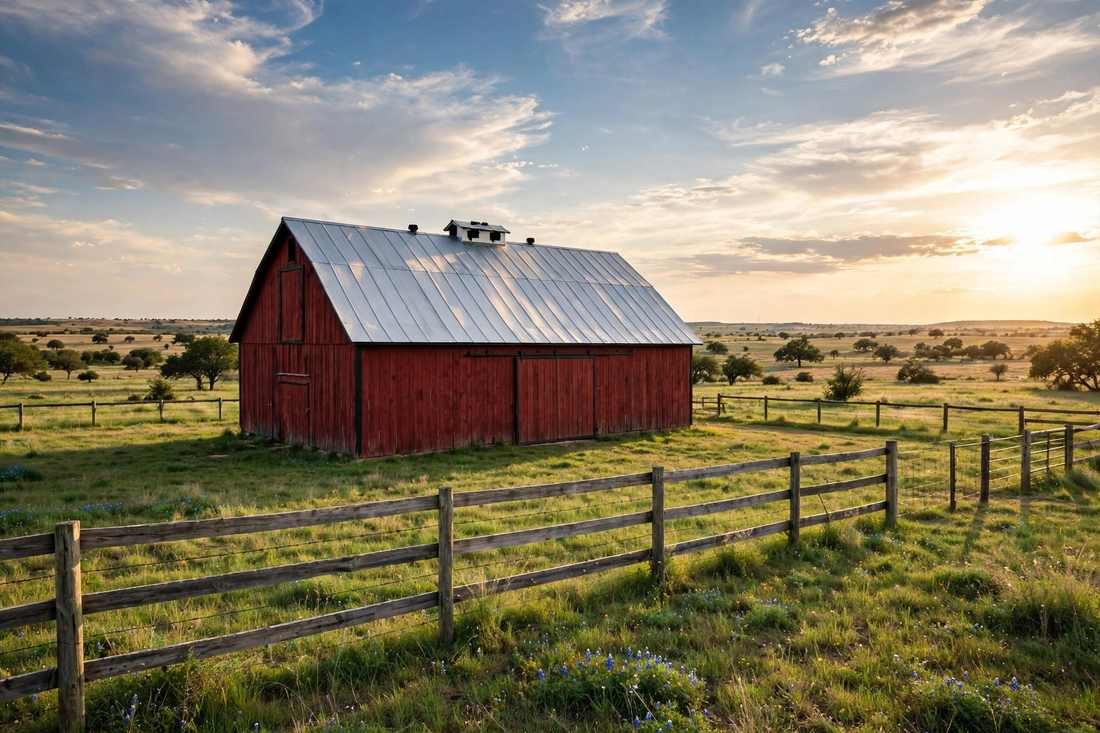
Metal roof on a red barn outside Pilot Point, Texas

What is under the roof decides the rush

A leak over hay, feed, tack or a workbench is not the same as a leak over an empty bay, and an honest crew asks what is stored below before they talk about timing. Water on hay breeds mould that ruins the bale from the inside. Water on tools and equipment rusts in days. If the roof over a working barn opens up in a storm, treat it with the same first-hour rules as the house: keep clear of any limb load, move what water ruins, and call it in as the emergency it is. Our emergency roof repair Pilot Point Texas crews tarp outbuildings the same way they tarp houses, battened and wind-minded, because the lake wind does not check which building it is stripping.

Old farmhouse roofs and honest limits

Some outbuildings are old houses, and some old houses out here carry roofs that have been layered, patched and re-patched across decades. We will always tell you plainly where a roof sits: sound and repairable, tired but worth a fix, or at the point where patching is just feeding it. That plain talk matters more in the country, where a roof may shelter animals, feed and a family's working gear all at once. What we will not do is dress up a small fix as a big one because the drive out was long. The drive is our problem. The roof is the job. That plain talk is the standard an emergency roof repair Pilot Point Texas crew should be held to on any roof, house or barn.

Know your roof

The roofs of Pilot Point, and how each one fails

Pilot Point roofs come in the same four kinds as the rest of Texas, but the mix here leans old, and the wind leans on all of them.

Shingle roofs

The usual roof in town, and the oldest. Shingle roofs rarely fail across the field; they fail at the fittings: boots, flashing, valleys, and the shingles a storm peels or rips off. On older houses the shingles themselves wear onto the list, gone brittle with their grit worn thin. The saving grace is that the damage stays in one place. A slope can be ripped open while the rest of the roof is sound, so the repair can stay small too. The catch is that lifted shingles like to settle back down and look innocent, leaving a roof that reads fine from the street while its seams stand open. Most emergency roof repair Pilot Point Texas house calls are shingle calls.

Metal roofs

You see these on barns, sheds, porches and plenty of country homes. Metal sheds rain quickly and takes hail that would mark up shingles without complaint, but its weak points are the seams and the screws. Years of heating and cooling work the fasteners loose and prise the panel joints open, and the first warning is often a drip that only appears when rain comes in sideways. A metal roof emergency is mostly careful sealing and refastening, done gently enough that the repair leaves no dents or scars on the panels.

Tile roofs

You will not see many tile roofs out here, and the few around can fool you. What catches your eye from the road is really just armour. The layer that keeps water out is the felt hidden beneath, and once that felt wears through, or a slipped tile splits it, rain travels under a roof that looks flawless from the street. Fixing tile in an emergency is slow going: each heavy piece must lift and reset without cracking its neighbours. That is skilled work, not a job for a borrowed ladder.

Flat and low-slope roofs

These sit over porches, additions and carports, and they break the rules the other roofs follow. Rain does not run off them; it sits. So one small split in the surface can swallow water for hours, then let it out a long way from the split, through a ceiling in a different room. Standing water is the tell: a puddle still there a full day after the storm means the slope or the drain has stopped doing its job. Even covering one works differently, since a loose tarp over a pond is just a pond wearing a lid.

Whatever sits on your house, an emergency roof repair Pilot Point Texas visit follows the same shape: the water gets stopped, the cause gets proven, the real failure point gets fixed. The details belong to your roof. The order does not.

The honesty check

Hiring a roofer in a small town: the checks that still work

After every big north Texas storm, the trucks roll out from the metroplex, and some of them find their way to Pilot Point. Some are fine roofers. Some find damage that was never there, and they are three counties away by the time the patch lifts. A small town has one advantage the city does not: everybody talks. Use it. And whoever you call, local or not, ask these questions before anyone climbs:

  1. Will you take pictures of everything you find up there? A photo you can study later, at your own table, tells you more than a summary called down from a ladder. Good crews treat the camera as a tool of the trade, not a favour. When it never leaves the truck, wonder what the visit is really about.
  2. Will you show me the exact part that failed? Ask them to point at the failure itself. A split boot around a vent pipe is an answer. "It is just old" is a shrug dressed up as one. Every real fault sits somewhere you can name: that boot, this valley, the lifted shingles facing the lake. Vague answers become a vague write-up, and vague write-ups are how a one-part fix grows into a whole roof.
  3. Is this a repair or a replacement, and why? Force the reason into the open. A reason that holds up will survive being spoken. "The flashing has split along the chimney line" is a reason. "Roofs like yours usually need it" is a sales line. This question carries the most weight on older Pilot Point roofs, because old describes a roof. It does not convict one.
  4. What exactly will you do today? Today's work is stopping the water. Everything larger can sit until you have had a clear-headed day to think it over. A crew pushing to begin the big job before the small one is finished has the sequence backwards, and in emergency roof repair Pilot Point Texas work the sequence is the whole point.
  5. Will you still be here after storm season? An address you can drive to beats a magnetic sign stuck on a truck door. Storm season drags crews in from three states away. Some of them roof perfectly well. Not one of them will be simple to track down in October when the patch gives way. In a town this size, ask for the names of neighbours they have worked for, then go and ask those neighbours yourself.
  6. Will the tarp be bigger than the hole it covers? A sound tarp reaches about four feet past the broken area on each side. It does not need to blanket half the roof. Some crews are paid by the square foot of tarp fitted, which means an oversized sheet can be about the money, dressed up as being careful. If the tarp looks enormous, ask what it is hiding and ask to see a photo of the damage underneath. Honest reasons do exist: felt torn across a slope, or damage scattered wide by the wind. A straight crew will point at the photo and tell you which one you have.

You will get answers to all six from our crews before a single shingle gets touched. Any emergency roof repair Pilot Point Texas roofer you are thinking of hiring should clear the same bar, and one who bristles at being asked has told you plenty.

There is one more test, and it asks nothing of you at all: listen to how a crew talks about a roof nobody has seen yet. Honest roofers describe what they plan to check. Sellers describe what they expect to find. One says "we will trace it and show you". The other walked in with the verdict already written. On emergency roof repair Pilot Point Texas calls, that gap in the first two minutes tells you most of what the next two hours hold.

Service areas

Pilot Point, and the towns around the work

You are reading the Pilot Point page. Our crews work a wider map, and each town on it has its own page, with its own local details:

Pilot Point

Wind off the lake, roofs with years on them, and leaks that can hide for months at a time. The lake keeps gusts strong out here, and ageing shingle fields give a little more at their edges with every season that passes. Leaks here tend to be the slow, hidden kind, so careful tracing counts for more than raw speed. You are reading its page.

Plano

the nearest of our city pages, down the road in Collin County. Big roofs, tall trees, and a hail history a mile long. Plano homes carry wide slopes and tall rooflines, which means more flashing, more valleys and more places for wind-driven rain to test. If your storm came with hail, the Plano page and our hail page are worth your next ten minutes.

Austin

Where our crews are based. Summers there run hot, storms run hard, and vent boots give up early in the heat. Half the roofs in town sit under live oaks as well, so falling limbs and valleys choked with leaves keep us busy.

Buda

Growing fast, hit by the same storms, just south of Austin. Subdivisions keep going up, so most roofs there are young, and young roofs fail at the joins rather than the open field: boots, flashing, and the seams where an addition meets the main roof.

Manchaca

the small community at Austin's south edge, where older homes and new builds share the same streets and the same storms. Roofs there split between tired originals and young replacements, and the checks differ accordingly.

Houston

Gulf weather, heavy rain and big, steep roofs. Houston leaks are driven-rain leaks more often than not, and the tracing there starts with the windward joints, same as here, just with more water behind them.

Do not see your town? Ring (512) 555-0147 anyway. If we honestly cannot reach you in time, you will hear that from us straight away, not after a night of waiting on a maybe. An early, honest no beats a hopeful maybe at midnight, and any emergency roof repair Pilot Point Texas crew worth your night would tell you the same.

Aftercare

After the repair: the next 30 days

Plenty of roof pages stop at the repair. Houses do not. This is what the weeks following an emergency roof repair Pilot Point Texas visit tend to look like, and the things worth keeping an eye on.

Get the inside dry, quickly. The roof may be sealed, but indoors the clock is still running. Carpet, insulation and plaster that stay wet past a day or two start growing mold in places you will never see. When the weather lets you, open the windows. Aim fans at the wet patch. Pull anything off the floor that holds damp against a wall. This is not flood restoration. It is making sure one bad night does not turn into a second repair.

Watch the stain, but do not touch it yet. One that is drying as it should stops creeping outward, and the rim turns light and dusty. One that spreads, darkens, or comes back after the next rain is a message: water still has a way in. That means a call back to us, not a paintbrush. Brush paint over a leak that is still live and you have muffled the one warning sign the house can give you. Give it three good storms first. A stain that comes through all three still dry can be painted over with a clear conscience.

Check the cover after every blow

Check a tarp from the yard, never from a ladder. After a hard lake wind, walk out and study it: a corner curled back, an edge standing up, rainwater sitting in a dip. Any of those means the cover has shifted, and a shifted tarp needs a crew back before the next rain arrives, not once it is already falling. Everything a tarp does wrong shows from the ground, and the lake wind will find its weak spots soon enough.

Keep the paper

The photos, the written scope and the visit notes belong in a folder, not a memory. If the roof ever needs work again, that folder is the history of what was found, what was fixed and what was left alone on purpose. It makes the next crew faster and the next decision easier, whoever the next crew turns out to be. In a house that has carried two layers and three patch jobs, that folder is the only honest map of the roof. Bring it out at the start of any emergency roof repair Pilot Point Texas visit and the crew starts ahead.

Trust your nose in the attic

Give it about a week. After the roof has seen a dry day or two, poke your head through the attic hatch and take one good breath. An attic that is drying smells of warm wood and dust. One holding damp smells sweet and musty, and that smell means water is still parked somewhere above you. No need to climb in or move anything. The smell by itself is reason enough to call. Catching damp in the first week is what keeps a drying job from becoming a ceiling opened up in month three.

And if one of these repairs ever fails you, call (512) 555-0147 and we will come back and make it right, because work that does not hold is still our work. An emergency roof repair Pilot Point Texas crew that will not return to its own repairs has shown you, better than any sales talk could, what those repairs were worth.

Questions

Straight answers

No sales talk. The questions Pilot Point callers ask, answered the way we answer them on the phone:

What counts as a roof emergency in Pilot Point?

Water getting in right now: a drip or a pour through a ceiling, a bulge forming overhead, a limb down on the roof, or daylight showing through the boards. Wind-lifted edges with rain still coming count too. A dry stain with no drip is urgent, but it can usually wait for a morning tracing visit.

Should I call now, or can it wait until morning?

Phone now if water is pouring in, a tree has landed on the roof, you can see daylight through the boards, or drips are falling close to light fittings or wires. A slow drip is different: if the rain has stopped and a bucket is holding it, that can wait until morning.

Why does my roof only leak when the wind blows off the lake?

Wind off Lake Ray Roberts drives rain sideways, and sideways rain climbs under shingle laps and into flashing joints that falling rain never tests. It also lifts at the edges it has been loosening for seasons. A leak that needs wind is a real leak, and it points the crew straight at the windward slope.

How do you find a leak that has been hiding for months?

We start in the attic, not on the roof. Dark streaks on the boards, rusty nail tips and flat, dark insulation mark the water's trail, and the highest wet mark points back to the entry. If the trail is faint, a two-person hose test on the roof, one section at a time, settles it for good.

My shingles are old and brittle. Can they still be repaired?

Often, yes. Brittle shingles snap instead of bending, so the repair has to be planned wider and handled gently, lifting and resealing the neighbours without breaking them. Some roofs reach the point where touching one spot breaks the next. When that is true, we show you the photos and say so plainly.

My roof has two layers of shingles. Does that change the repair?

It does. The top layer hides the state of the one under it, so a soft spot can be rot in the buried layer or the deck, and leak trails run between layers. Repairs still work, but the scope has to name the layers honestly. A crew that talks as if your roof has one layer has not looked yet.

Do you repair roofs on barns and outbuildings?

Yes. Barns, sheds and workshops around Pilot Point are working roofs, and most are metal. They fail at the screws and seams: washers crack, fasteners work loose, and drips start over whatever is stored below. We tarp and repair them the same way as house roofs, battened down and checked after the next blow.

A storm just passed over the lake. What should I check first?

Walk the yard for shingles and grit, and note which side they are on. Look at the edges and ridge from the street. Check every ceiling, then the attic hatch if it is safe. Listen for slapping on the next windy day. Ten minutes of looking turns a worry into a list you can read to us.

Will I be pushed into a whole new roof?

No. The majority of emergency calls finish as a repair. We mend what is broken, take photos before and after, and walk you through what the pictures show. When a roof really has reached the end, the evidence is there for you to study, and the decision happens at your table, in your time, never under pressure on the night.

How do I know a roofer is safe to hire in a small town?

Texas has no state licence for roofers, so a card and a truck prove nothing after a storm. In a small town, ask around: a crew that works here all year has neighbours who will say so. Look for a real address, a written scope, photos of the damage, and plain answers to plain questions.

Can a slow leak really damage a roof without ever dripping?

Yes, and it is the most common pattern on older Pilot Point roofs. A trickle soaks the deck, flattens the insulation and feeds mould in the dark, then dries between rains. Months of that leave rot and a soft deck long before the ceiling shows a stain. That is why a new stain deserves tracing, not paint.

How long does an emergency repair take?

In most cases, yes. The first visit is about getting the water stopped: covering one damaged section with a tarp takes an hour or two, and a small leak can often be fixed on the spot. Bigger damage is sealed tight for now, with the full repair set for when the roof is dry and properly checked over.

Is tarping worth it on an older roof?

When water is getting in, yes. A tarp fitted flat, tight and battened protects the house for about 30 to 90 days while the real repair is planned. On an older roof the fitting matters even more, because brittle shingles cannot take a careless ladder or a dragging sheet. Done right, it buys calm weeks.

Water does not wait, and neither should you.

This is a 24 hour emergency roof repair service: one number that Pilot Point homes can call at any hour.

(512) 555-0147
Call (512) 555-0147