Roof Inspection · Texas
A real inspection ends with photos and a short written list, not a sales pitch on your doorstep.
This is the roof inspection Texas page of Emergency Roof Repair Texas. It tells you what a full check actually covers, what you should be handed when it ends, and how to spot the knock on the door that is not an inspection at all. Read it before you let anyone climb. If your roof is leaking right now, skip the reading and call (512) 555-0147. An active leak is an emergency job first and a checking job second.
Crews working from the towns they live in, not a call centre three states away.
A roof inspection is a point by point check of the whole roof, top side and attic side, that ends with photos and a written list of what is fine, what to watch, and what needs fixing. It is a check, not a repair and not a sales visit. On a roof inspection Texas homeowners can trust, every finding comes with a photo and a plain reason.
The honest version
Most people meet this service at the worst moment: right after a storm, with a stranger at the door and a ladder already leaning on the gutter. So it is worth saying plainly what the thing is when it is done right. A roof inspection is a careful look at the whole roof, taken point by point, that answers three questions. What is fine? What is wearing out? What is already letting water in, or about to? That is the whole job. Nothing gets sold inside a real inspection, because nothing has been found yet. The finding comes first. Any talk of work comes after, and only about the spots the photos actually show.
That order is what separates a check from a sales visit. On a sales visit, the verdict exists before the ladder goes up: the roof is old, the roof is done, sign here. On a roof inspection Texas crews run properly, the verdict does not exist until the last slope has been walked and the attic has been read. The inspector climbs with a phone or a camera, a piece of chalk, and no opinion. What comes down the ladder is evidence: photos of every slope, close shots of anything worn or broken, and notes you can read yourself. If a company cannot tell you, before they climb, exactly what they will check and what you will be handed at the end, you are not booking an inspection. You are booking a pitch with a ladder in it.
An inspection is also not a repair, and it is not a guess from the ground. A repair fixes one known problem. An inspection goes looking for problems you do not know about yet, including the ones that will not leak until next season. And a look from the driveway, however experienced the eyes, cannot see a cracked vent boot, a lifted seal, or a bruised shingle mat. Those show at arm's length, up close, which is why a roof inspection Texas homeowners pay attention to is always a roof walked, not a roof glanced at. The sections below walk the whole check the way our crews run it, point by point, so you can hold any inspector to the same list, ours included.
One more thing an inspection is not: it is not a promise. A good check tells you the state of the roof today, in photos, with reasons. It cannot swear the roof will never leak, and it cannot hand you an exact birthday for the day the roof wears out. Any inspector who promises either is selling again. What a real roof inspection Texas page should promise is smaller and stronger: every slope looked at, every finding photographed, every word of the report plain enough to check yourself. That is the standard this page is written to, and it is the standard to hold us to when you call (512) 555-0147.
The checklist
A roof is not one surface. It is a field of shingles stitched together with edges, joints, holes cut for vents, and metal strips where two slopes meet. Water gets in at the stitches far more often than through the middle of the field. So a full roof inspection Texas check works through the roof in parts, and each part gets its own close look. Here is the list, in the order a careful inspector walks it. If the person on your roof skips parts of this list, the check is not finished, whatever the report says.
The field is the wide open slope, the part you see from the street. Up close it tells a long story. The inspector looks for shingles that are cracked, curled at the corners, or missing their gritty surface. That grit is the shingle's skin against the sun. Where it has washed off, the spot goes smooth and dark, and it ages years in a single summer. Tabs get lifted by hand, gently, to test the seal underneath. A sealed tab holds. A tab that lifts with no pull has a broken seal, and a slope full of broken seals is a slope the next hard wind will peel. The field also gets read for pattern: damage scattered at random usually means wear and age, while damage lined up along one line usually means wind worked that line, tab by tab.
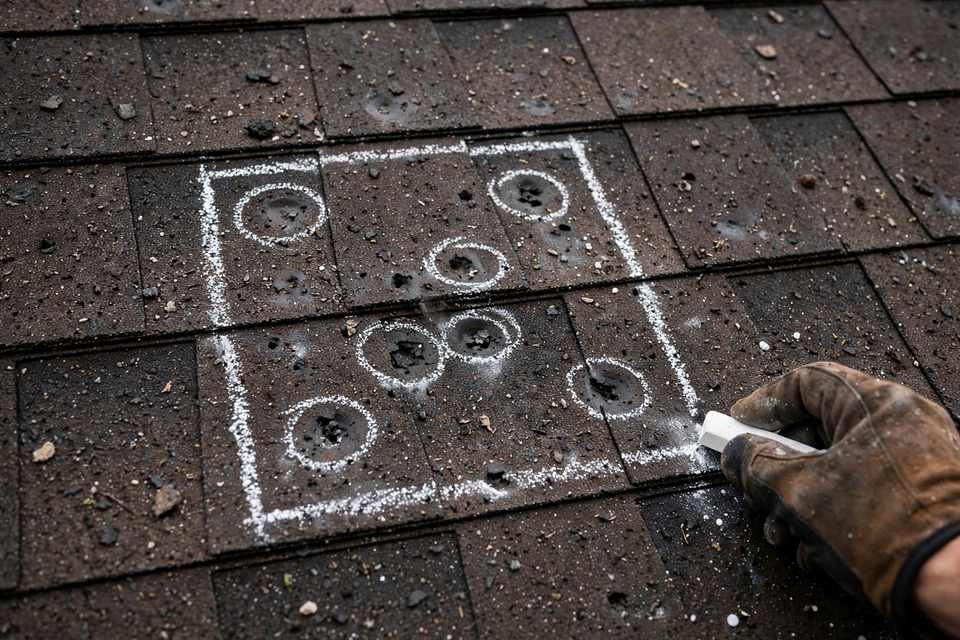
After a hail storm, the field gets one more test, and it is the test that settles arguments. The inspector chalks a square on the slope, ten feet by ten feet, and counts every hail hit inside it, circling each one. Then the same count happens on the other slopes, because hail does not fall evenly on a house. One slope can be beaten while the slope beside it is clean. The count, per slope, in photos, is the honest middle between "your roof is destroyed" and "your roof is fine." A roof inspection Texas homeowner can check is a count they can recount. If someone tells you the hail ruined the roof but cannot show you a counted square, you have heard an opinion, not a measurement.
Every roof has holes cut through it on purpose: plumbing vents, exhaust fans, furnace flues. Each hole is wrapped in a fitting, and the most common of them, the pipe boot, is a rubber collar that hugs the pipe. Texas heat cooks that rubber. In five to ten summers it hardens, splits, and opens a neat little doorway for rain, right at the pipe. It is the single most common leak source our crews find, and it hides in plain sight. A full check puts eyes and a hand on every boot and vent: rubber squeezed for cracks, metal felt for rust and dents, collars checked for gaps. A roof inspection Texas crews take seriously spends real time here, because this is where most leaks are born.
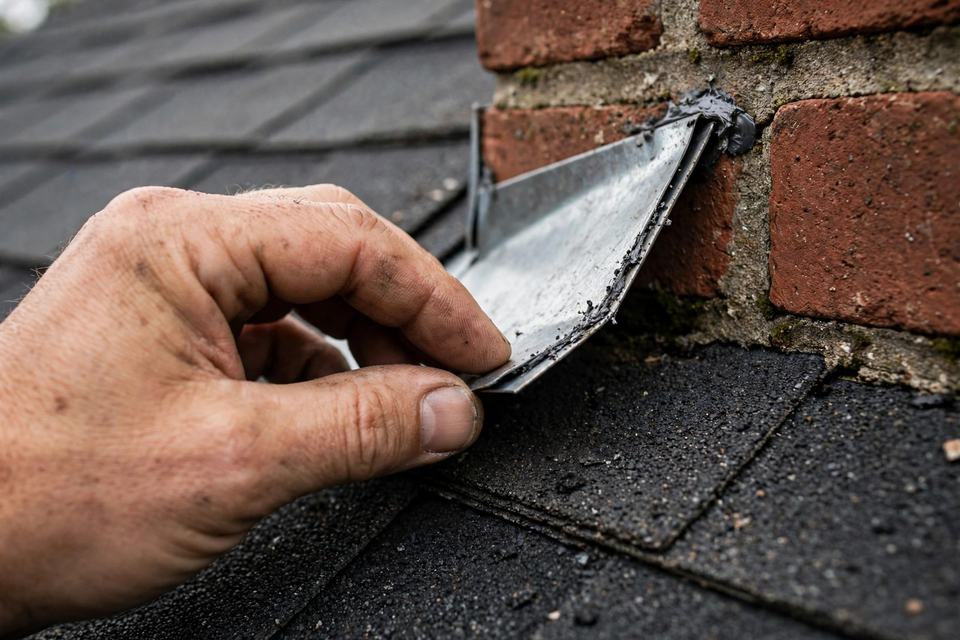
Wherever the roof meets something that is not roof, there is flashing: thin metal tucked and sealed along chimneys, walls, skylights, and the edges of dormers. Flashing does the quiet work of turning water away from the seams. It also fails quietly. Sealant dries and splits. Metal lifts at a corner. A step flashing piece slides out of line. None of this shows from the ground, and all of it leaks, usually into a wall or a ceiling corner far from the joint itself. The inspector runs every foot of flashing by eye and by hand, looking for lifted edges, cracked sealant, rust lines, and the dark streaks that say water has been travelling behind it.
A valley is the inside corner where two slopes meet, and it carries more water than any other part of the roof. In a hard Texas rain a valley is a river. Shingles along it get checked for cracks and lifted edges, the valley metal or woven shingles get read for wear, and the whole line gets checked for the leaf dams and grit piles that slow the water and push it sideways under the shingles. A valley that looks fine in dry weather can still be the first place a driven rain gets in, so a roof inspection Texas check treats valleys as guilty until the close look clears them.
Wind does not start in the middle of a roof. It starts at the edges. The inspector checks the eave edges and the rake edges, where the first row of shingles takes the lift, and the ridge line along the top, where cap shingles crack and blow off one by one. Under the eaves, the drip edge metal and the fascia board get read for rot and for the water stains that say the edge has been leaking back under the shingles. A missing ridge cap or a soft fascia board is a small thing on the day it is found and a big thing a year later, which is exactly the trade an inspection exists to catch.
Gutters are not part of the roof, but they tell on it. The inspector reads the gutters and the ground below the downspouts for granule piles, because that grit is the roof surface washing away, and a heavy pile means the field is wearing fast. Gutters get checked for sagging and for standing water, since a gutter that holds water pours it back over the fascia in every storm. Overflow stains down a wall, streaks under a gutter joint, and soil washed out below a downspout all go in the notes. On a roof inspection Texas report, the gutter line is often the first honest clue about how fast the whole roof is ageing.
The other half
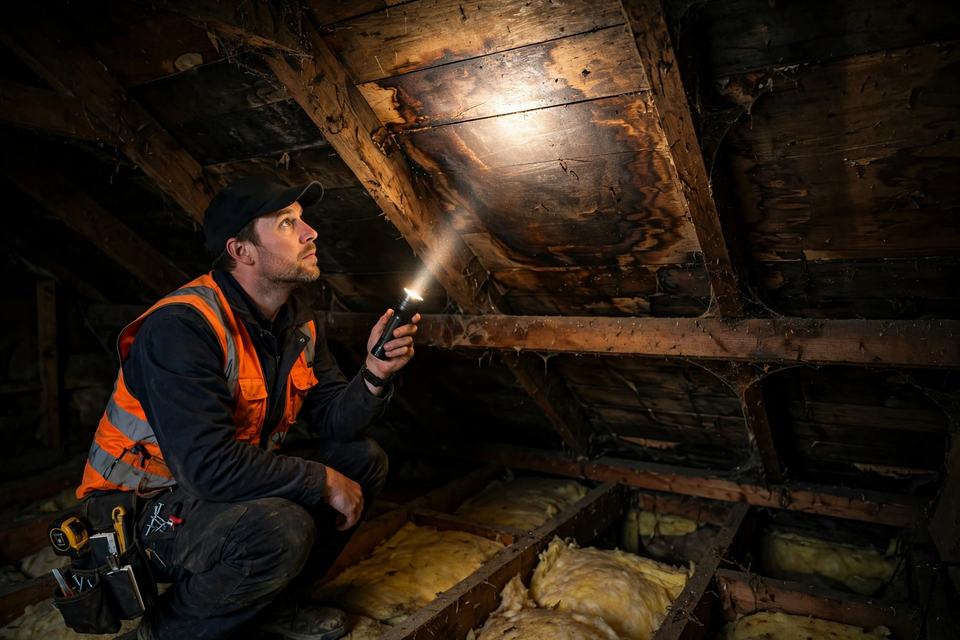
Here is the quiet difference between a full check and a quick one. Half of what a roof can tell you is written on the underside, in the attic, and most inspections never go up there. A roof walked from the top only shows its skin. The attic shows its bones and its memory. Water that got in last spring and dried by summer still left its mark below: a dark streak down a rafter, a rusty nail tip, insulation pressed flat and dark where it stayed wet. A roof inspection Texas homeowners can rely on reads both sides, because the top side shows what is worn, and the attic side shows what has already leaked.
The attic check starts with the decking, the boards or panels the shingles are nailed to. The inspector reads them from below with a light, looking for dark water stains, soft spots, and the white or green fuzz of mould growing where damp sat too long. Stains get mapped: a stain under a valley points one way, a stain under a vent points another, and a stain in the middle of nowhere points at a cracked shingle or a nail that worked loose. This is the stain rule our leak crews use every week: the ceiling stain is rarely under the hole. Water enters high, travels along the boards, and drips low. The attic is where that travel leaves its tracks.
Ventilation gets checked next, and it is not a small thing in Texas. An attic that cannot breathe cooks the roof from below. Summer heat trapped in a still attic shortens shingle life and warps decking, and winter moisture trapped the same way feeds rot. The inspector checks that vents are open, that insulation is not stuffed over the eave vents, and that bathroom fans are not venting warm wet air straight into the attic, which happens more often than anyone expects. Then comes moisture itself: the feel of the air, the smell of it, a meter reading on any suspect board. A dry attic smells like warm wood and dust. A damp one smells sweet and musty, and that smell is a finding, written down like any other.
The attic also answers the age question better than the top can. From above, a roof can look tired but sound. From below, soft decking around a chimney, sagging boards between rafters, and old stains layered over older stains tell you how the roof has really lived. When a roof inspection Texas report says the decking is sound, that sentence should come from the attic side, not from a guess made on the shingles. If the person who checked your roof never opened the attic hatch, you got half an inspection. Say so, and ask for the other half.
Timing
People ask when a check is worth booking, and the honest answer is that it depends on what the roof has been through and what you are about to decide. These are the moments our crews hear about most, and what a check can and cannot do at each one. A roof inspection Texas booking made at the right moment is the one that catches a small fix while it is still small.
This is the classic moment, and the trickiest, because it is also the moment the door knockers come out. After hail or hard wind, a check sorts real damage from marks that do not matter, and it does it with the counted test square and per slope photos described above. Book it once the roof is dry and safe to walk. Do not sign anything at the door in the first days, and do not let urgency rush you: real storm damage looks the same on Tuesday as it did on Saturday. What changes fast is a leak, and a leak is a repair call, not an inspection call. Our storm damage roof repair page covers that side of the work.
A yearly check is the quiet bargain of roof care, though nobody should sell it to you with scare talk. Roofs wear in small steps: a boot cracks, a seal lifts, sealant splits along one flashing run. Each step is a small fix in the year it happens and a ceiling stain the year after. A roof inspection Texas crews run each year, ideally in spring before the hardest storm season or in fall before winter rain, keeps a list of those small steps and clears them while they are still small jobs. The yearly list also becomes the roof's history, which matters when you sell, and when you argue with anyone about when damage happened.
A general home inspection gives a roof a few minutes and a look from the ground or the eaves. That is not the same thing as a roofer's check. Before you buy, a roof inspection Texas buyers book for themselves answers the questions a purchase actually turns on: how much life is in this roof, what needs fixing now, what will need fixing in the next few years, and is there old leak damage hiding in the attic. Get it during your option period, get it in writing with photos, and get it from a roofer you chose, not one sent by the seller. The roof is the one part of a house that can hand you a five figure problem in your first year, and it is the part a quick look judges worst.
Sellers book the same check for the mirror reason. A roof inspection Texas sellers order before listing turns the roof from a question mark into a document. If the check is clean, the report calms buyers. If it finds wear, you choose: fix the small list yourself, or hand the buyer the honest report and settle the rest with facts on the table. What you do not want is the buyer's inspector finding a surprise in your attic two weeks before closing, when every fix is a rush and every number is an argument.
A new ceiling stain is the roof asking for attention in the only language it has. A stain does not always mean the roof failed above it, because water travels, sometimes eight feet from where it got in. But a stain always means water got in somewhere, and it will get in again at the next rain. This is the moment a roof inspection Texas crews treat as part detective work: attic first, entry point second, and the stain itself last. Book the check when the stain appears, not after it has grown through two more storms. A stain that is caught early is usually a boot, a flashing run, or one cracked shingle. A stain left alone becomes decking, insulation, and ceiling. If the drip is active tonight, start with our roof leak repair page instead.
Age changes what a check looks for. A five year roof mostly needs its boots and seals watched, because the field is young and the rubber parts age fastest. A ten to fifteen year roof starts showing field wear: grit loss, the odd cracked tab, sealant giving up along the flashing. Past fifteen years in Texas sun, the check turns into an honest conversation about which slopes are wearing out first and whether repairs still make sense slope by slope. A roof inspection Texas owners of older roofs book every year or two is not about selling a new roof. It is about knowing, with photos, which year the old one stops being worth patching. That call should be made from evidence, slowly, and it leads to the repair or replace page of this site, not to a signature at the kitchen table.
The clock test
Time is the easiest tell you have. A full check of an average Texas house, every slope walked, every boot and flashing run read by hand, the test square counted where hail is in question, and the attic read from the hatch or from inside, takes the better part of an hour on the roof and under it. Bigger roofs, steep roofs, and roofs with a lot of valleys and penetrations take longer. A two slope ranch with a simple attic takes less. But there is a floor under the time, set by the list itself: nine areas, two sides, and photos of all of it. Nobody honest covers that list in fifteen minutes.
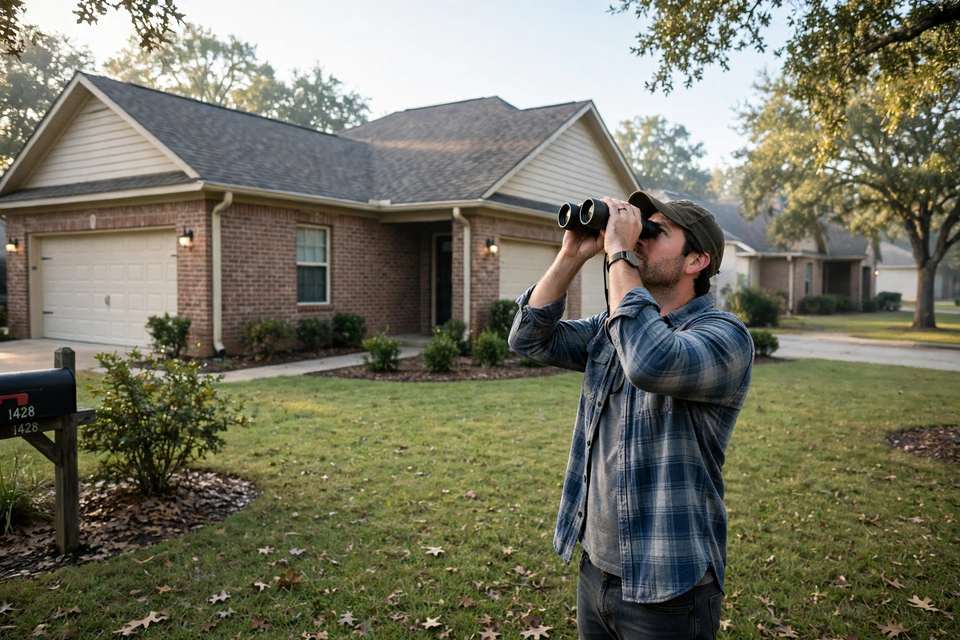
So what is the fifteen minute visit? It is a walk to the worst looking slope, a few photos of the most dramatic marks, and a verdict that was written before the ladder came off the truck. Fifteen minutes is enough time to find a reason to sell. It is not enough time to check a roof. The same goes for the inspection that happens entirely from the ground with binoculars, or the one where the inspector never opens the attic hatch and never touches a single shingle. Those are looks, not checks. A roof inspection Texas homeowners can act on takes the time the list takes, and the inspector should be able to tell you, before starting, roughly how long the check of your roof will run and why.
There is a second tell, just as easy. Watch what the person carries up the ladder. A real inspector carries a camera or phone, chalk, a tape, and a light for the attic. The notes come down full. A sales walker carries a folder. The folder has the contract in it. If the paperwork reaches your kitchen table before the photos do, you already know which visit you are having. Send it back out the door, politely, and book a roof inspection Texas crews run the slow way. Slow is not a flaw in this trade. Slow is the product.
Read this before the next storm
This is the section this page exists for, because the fake inspection is the number one roof problem in Texas, bigger than hail. It never announces itself. It arrives as help. Learn its shape once and you will see it every time, including the times it knocks on your neighbors' doors and you get to warn them.
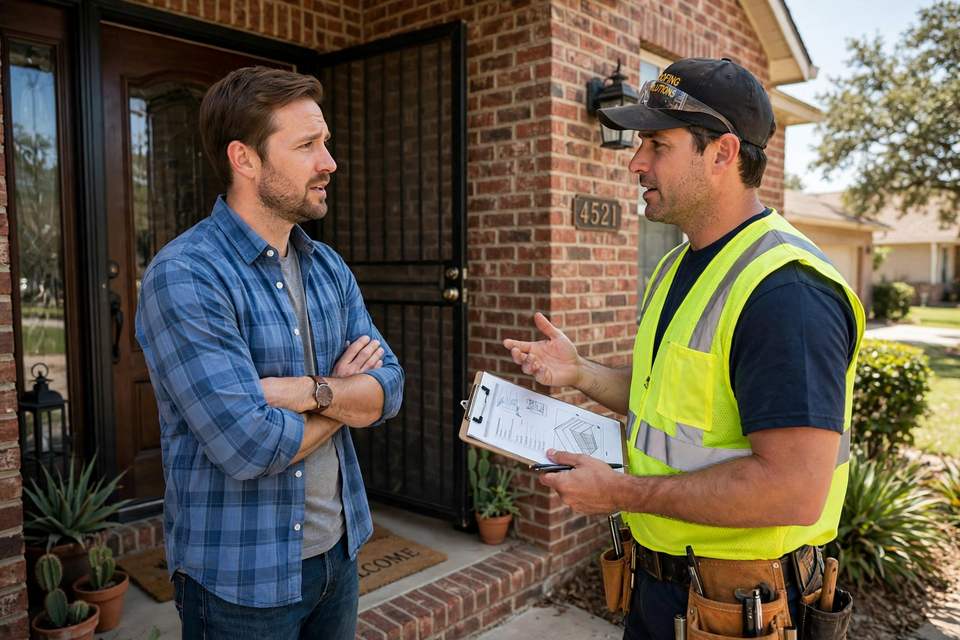
It starts with timing. The knock comes within days of a storm, sometimes while the streets are still drying. The person at the door is friendly, local sounding, and in a hurry on your behalf. They were working on a roof nearby, they say, and they noticed your roof from the street. They can see damage. They will climb up and check it for nothing, right now, it only takes a few minutes. Every part of that script is a tool. The storm makes you worried. The neighbor story makes it feel normal. The street diagnosis makes it feel urgent. And the fact that it asks nothing of you makes it feel like there is no decision to make at all. There is a decision. You are letting a stranger onto your roof, alone, unsupervised, with a story to prove when he comes down.
What happens on the roof is the part nobody sees, and that is the point. In the honest version of this trade, an inspector photographs what the storm did. In the fake version, the damage gets help. Hail marks appear in neat rows where a hammer or a coin edge has been worked across the shingles. Tabs get lifted and creased by hand so the wind can be blamed. Old wear gets photographed tight and close, so a worn slope reads as a ruined one. Then comes the verdict, delivered fast and big: the whole roof is done. Not a boot, not a slope, not a list. The whole roof, in fifteen minutes, from a man who had decided it before he climbed. A real roof inspection Texas check has never once ended that way, because real damage does not arrange itself into a single sentence.
Then the pressure starts, and it has a sound: today. The special ends tonight. The crew is in the area this week only. Sign now and they will handle everything, make all the calls, take care of all the paperwork. A contract signed within fifteen minutes of meeting someone is a bad sign in any trade, and in roofing it is the reddest flag there is. The honest version of this visit ends with photos in your hand and time to think. The fake one ends with your signature and a company that, come winter, nobody in your town can find. Gone by winter is not a figure of speech. It is the business model.
Here is what to do instead, step by step, the next time the knock comes. Say thank you, and say no to the ladder today. A roof that survived the storm will survive until a booked check on a dry day. Ask for a card, a local address, and the names of three jobs finished in the last six months, then check them at your own pace. Book your own roof inspection Texas appointment with a company you found, at a time you chose, and be home when it happens. Watch the check happen. Ask the five questions in the section below. And if two checks disagree, believe the one with more photos and less hurry. That is the whole defense. It fits on an index card, and it works on every version of the knock, this year and next.
None of this is an attack on door to door work itself, and none of it names any company, because it does not need to. Plenty of honest roofers knock after storms, and they behave the opposite way at every step: they leave a card instead of climbing, they book a time instead of pushing in, they show photos instead of adjectives, and they leave you a written list instead of a deadline. Judge the visit by its shape, not its smile. The shape never lies.
The handover
An inspection you cannot hold in your hand did not really happen. When a roof inspection Texas visit ends, you should be handed three things, and you should not have to ask twice for any of them.
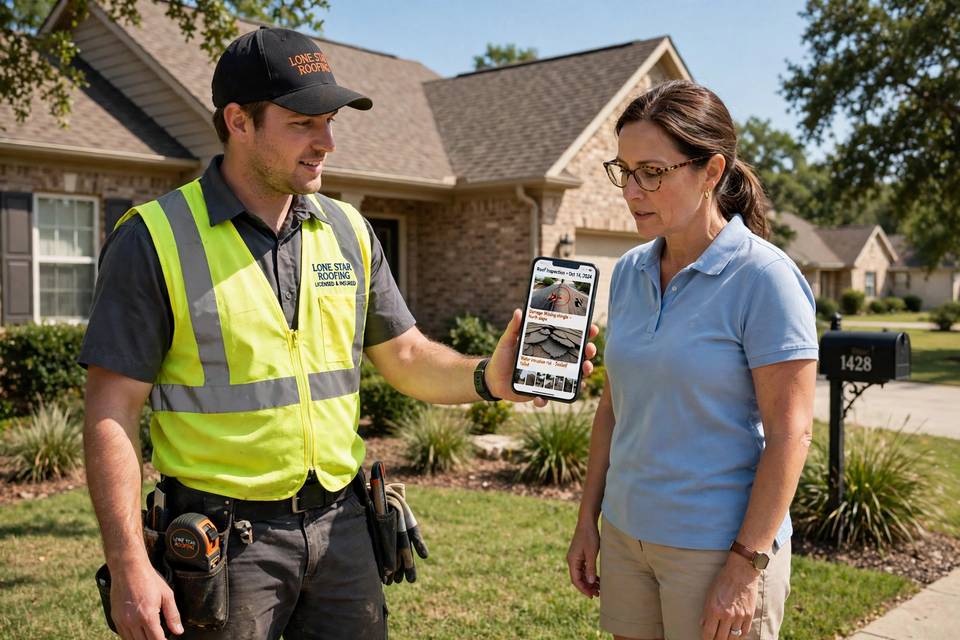
First, photos. Every slope, wide shots that show the whole face of the roof, and close shots of every finding, taken close enough that you can see the crack, the lifted seal, the split boot rubber with your own eyes. Photos of the attic findings too: the stain, the board, the vent. If a finding has no photo, treat it as a rumor. Second, a written list, sorted into three parts. Fix now: the items that are leaking or will leak at the next hard rain. Watch: the wear that is real but not urgent, with a note of what to look for and when to look again. Fine: the parts of the roof that were checked and are sound, named slope by slope, so the report is a record of the whole roof and not just its wounds. Third, plain words. The list should read the way this page reads. If a sentence in your report needs a roofer to translate it, the report was written to impress you or to hide in, and either way it was not written for you.
Keep the folder. The photos, the list, and the date become the roof's history. They settle arguments about when damage happened. They make the next check faster, because the next inspector can compare instead of starting over. And they protect you at sale time, when a buyer asks what the roof has been through and you can answer with paper instead of memory. A roof inspection Texas report is a small thing on the day it is written. Five years later it is the only honest witness the roof has.
Your side of the folder
Most homeowners read their report once, looking for the verdict, and file it. Read it a second time, slowly, the way you would read a letter about your own health, because that is roughly what it is. Here is how a roof inspection Texas report is built, and how to tell a good one from a dressed up sales sheet.
Start with the coverage. The report should name every slope and every part of the checklist: field, penetrations, flashing, valleys, edges, gutter line, and the attic side. A report that only talks about two slopes is a report about two slopes. Then read the findings one by one and ask of each: is there a photo, does it say exactly where on the roof it is, and does it say why it matters in plain words? A finding that passes those three tests is information. A finding that fails them is decoration. Watch the verbs. "Cracked boot at the rear plumbing vent, letting water in at the pipe" is a finding. "Significant deterioration observed" is a fog machine. Fog in a report always blows in one direction: toward the biggest job.
Then read the sorted list the way it was meant to be read. The fix now list should be short, specific, and mostly small: a boot, a flashing run, a handful of tabs, one valley. If the fix now list is the entire roof, ask for the per slope counts and the photos, and get a second roof inspection Texas opinion before you agree to anything. The watch list is the report's real value over time. It tells you what to photograph from the ground each season and what change means call us. And the fine list matters more than it looks: five years from now, when a storm has passed and a stranger is telling you the whole roof is ruined, the fine list with its dated photos is your proof of what the roof was before the storm. Keep it with the house papers.
Second opinions deserve one plain paragraph, because people feel awkward asking for them. Do not. A roof is a big, slow, expensive thing to be wrong about, in either direction. An honest inspector expects a second check the way an honest doctor does, and will hand over the photos to make it easy. The only inspector who minds a second opinion is the one whose verdict cannot survive one. If two roof inspection Texas reports disagree, lay the photos side by side and believe your own eyes. The roof does not care who is right. It only cares what is true, and the photos are where the truth is kept.
Before the ladder goes up
Ask these before the ladder goes up. They take two minutes, and the answers sort honest inspectors from sales walkers faster than any review page. They work on us, too. A roof inspection Texas booking that starts with these questions is a booking that stays honest.
In print, on purpose
Honesty about limits is part of the product, so here are ours, in print. A roof inspection Texas check is a careful look at what can be seen and touched on the day. Some things it cannot do, and anyone who says otherwise is selling.
It cannot see through the roof. Under every shingle lies underlayment and decking that only show where they have already failed or where the attic side gives them away. A check reads the signs those hidden layers send up: soft spots underfoot, stains below, a slope that feels spongy along one line. But a section that has not yet sent a sign cannot be judged, and a good report says so instead of guessing. It cannot date the roof to the year, let alone the month. Wear gives a range, shaped by sun, slope direction, attic heat, and storm history, and two roofs of the same age can be a decade apart in condition. Anyone who names an exact remaining life is inventing a number to lean a verdict on.
It cannot promise the roof will not leak. A check finds today's openings and today's weak points. It cannot see the nail that will work loose in August or the branch that will fall in October. What it can do is shorten the list of surprises and date the evidence, so that when something does happen, you know whether it is new. And it cannot judge what it could not reach. A slope too steep or too wet to walk safely, an attic too low to enter, a section hidden under a solar array: a straight report names the parts it could not check, in writing, so you know where the blind spots are. Weather on the day matters too. A roof checked bone dry shows its wear but hides its active leaks, which is why your dated notes of when drips happen are part of the evidence. A roof checked in the rain shows the leaks and hides half the wear. A good inspector tells you which kind of day it was and what that means for the findings. A roof inspection Texas report with no blind spots named is a report that stopped looking early. Hold every inspector to the limits on this list, starting with us.
The Texas calendar
A roof in Texas does not age evenly through the year. It takes its beatings in season, and a smart inspection calendar follows the weather, not the date a salesman picked. Here is the year the way our crews live it, and where a roof inspection Texas booking does the most good in each part of it.
Spring is hail season, and in the middle of the state it is not a small thing. The record, counted from storm reports since 2010 within fifteen miles of each city centre, says Dallas has seen 91 hail days, Plano 113, San Antonio 63, and Austin 59. That is the weather your roof actually lives in. A check booked in late spring, after the worst of the hail has passed, reads the season's damage while it is fresh and gets the small list fixed before summer rain drives it in. It is also the season of the knock on the door, so spring checks should be booked, never accepted at the doorstep.
Summer is the heat season, and heat is a slow storm that lasts four months. Texas sun cooks boot rubber, dries sealant, and bakes the attic, and the damage shows up as leaks in the fall. A mid summer attic check earns its keep here: ventilation read, moisture sniffed out, boots squeezed before they split. Fall is the fixing season, the calm window when the watch list from spring gets cleared and the roof goes into winter rain tight. Winter itself is mostly quiet, broken by the odd freeze snap that splits what summer weakened. A roof inspection Texas owners book once a year usually lands best in spring or fall. Twice a year, spring and fall, is the rhythm for older roofs and for houses under big trees. The point is not the number of visits. The point is that the check follows the damage, season by season, instead of arriving years late in the shape of a ceiling stain.
Materials matter
The checklist is the same nine areas on every roof, but each material fails in its own way, and a roof inspection Texas check has to speak the material's language.
Asphalt shingle roofs, the great majority in Texas, fail at their parts first: boots, flashing, seals, ridge caps, and then in the field as the grit gives up. The shingle check is a hands on check, tabs lifted, seals tested, mats pressed for the soft bruise a hailstone leaves. Metal roofs, standing seam and screwed down panels, fail at their fasteners and seams. Screws back out with the years of heat and cold, washers crack, seams open a hair, and the leak that follows is slow and sneaky, travelling along a panel before it shows. The metal check works the fastener lines and reads the attic for the long thin stains that give seam leaks away. Tile roofs fail underneath: the tiles shed the water, but the felt beneath does the sealing, and when the felt dies of age the tiles hide it until the decking rots. A tile check lifts tiles at the edges and valleys to read the felt, carefully, because old tile breaks under a careless foot. Flat and low slope roofs, in TPO, modified bitumen, or built up layers, fail where water stands. Ponding water after rain, seams that have opened, and edges where the membrane has pulled back are the whole story, and the check walks the ponds and reads every seam by hand.
The point of the list is simple: an inspector who checks a tile roof the way he checks a shingle roof is not checking your roof. He is checking a roof he remembers. Ask which parts of the check change for your material before the ladder goes up. A roof inspection Texas crew worth booking will answer that question slope by slope, because they have already thought about your roof before they arrive at it.
Feet on the ground
You do not need a ladder to keep an eye on your own roof, and you should never climb up there to try. Wet or dry, a roof is one of the most dangerous places at a house, and every finding in this section can be made with both feet on the ground or your head through the attic hatch. A roof inspection Texas crew would rather you did this short walk twice a year than called once in a panic.
Walk the yard after every big rain and look up. Shingles in the grass, grit piled at the downspouts, a ridge cap sitting crooked, a valley full of leaves: each is a sentence in the roof's diary, and each is worth a photo with the date on it. Use binoculars if you have them and read the slopes the way you would read a page, left to right, line by line. Inside, walk the ceilings with the same habit, especially under valleys and around chimneys, and put your head through the attic hatch once a season and breathe. Warm wood and dust is a healthy attic. Sweet and musty is a call. That is the whole home check: ground, ceilings, hatch. When any part of it changes, that is when a full roof inspection Texas visit earns its place, with your dated photos in hand to show the inspector where to start.
Three good endings
A good check ends in one of three places, and all three are fine outcomes. The first is the clean report: the roof is sound, the watch list is short, and you file the photos and get on with your year. Clean is a real result. An inspector who can say clean, and show the photos to prove the looking happened, has done the whole job. The second is a repair list: a boot, a flashing run, a valley, a handful of tabs. That list goes to the repair work itself, and on this site that story continues on our roof repair page, where the fix now items get fixed one by one, in photos, before and after. If the findings are storm or hail damage, the storm damage page and the hail damage page take it from there, with the counted squares and the slope by slope record this page taught you to demand.
The third outcome is the honest hard one: the check finds a roof at the end of its life, slope by slope, with the photos to show it. That is not a verdict to accept at the kitchen table, and it is not one we would ask you to. It is the start of the repair or replace conversation, which has its own page on this site because the call deserves more than a paragraph: how the count is made, what tips it, and how to make it slowly, from evidence. And if the check finds water getting in right now, the order flips back to the rule this whole site runs on: stop the water first. A cover goes on, the leak gets traced to its entry point, and the inspection finishes when the roof is dry and safe to read. The guide to what counts as an emergency, and the pages on tarping and leak repair, are there for exactly that moment. Whatever the outcome, the inspection has done its work if you end the day knowing more about your roof than the person who knocked. Call (512) 555-0147 when you are ready for the check itself, and bring your questions. We will bring the chalk.
Service areas
Nobody drives in from two counties away to look at your roof. Our roof inspection Texas crews live in the towns below, and each one gets its own page with the wear we see there:
the town our crews call home and work from. Storms hit hard here, and the summer heat splits pipe boots years before their time. Live oaks drop limbs on these roofs and pack the valleys with leaves. The attic tells the truth first: it shows what an Austin roof has been through before the shingles admit it.
twenty minutes from our tools, growing fast, and in the storm path. The subdivisions are new, so the roofs are young, and young roofs let go at the parts first, not across the open field: boots, flashing, and the seams where additions tie into the main roof. A Buda check works through that parts list.
Wind off the lake works on these roofs all year. The houses are older, and season after season that wind worries the shingle edges until they lift. Trouble here stays out of sight, so the attic side of the inspection carries the most weight: slow leaks can run for months before anyone spots them.
big roofs, tall trees, and a hail record a mile long: 113 hail days since 2010 within fifteen miles of the city centre. Plano homes carry wide slopes and tall rooflines, which means more flashing, more valleys, and more for a counted test square to settle after spring storms.
Do not see your town? Call (512) 555-0147. If we cannot reach you in time, we will say so on that call, plainly, instead of leaving you hanging on a maybe. An early no is worth more than a late promise.
Early warnings
A roof rarely fails all at once. It asks, quietly, in small signs, for a year or two before it lets water in. Learning the asks is the difference between booking a roof inspection Texas visit while the list is still small and booking an emergency crew at 2 a.m. Here are the asks our crews hear about most, in the order homeowners usually notice them.
Grit where it should not be. The gritty surface of a shingle is its sunscreen. When it starts coming off in handfuls, it lands in the gutters and piles up below the downspouts after every rain. A little grit on a new roof is normal shedding. A growing pile on an older roof is the field wearing out in the open. Tabs that do not lie flat. From the ground, look along the slopes in low sunlight, morning or evening, when shadows tell the truth. A tab that curls, a corner that lifts, a line that ripples where the rest lies flat: that is a seal letting go or a mat cracking, and both are entries on a check list long before they are leaks. Stains and streaks. A new ceiling stain is the loudest ask, but the quieter ones count too: paint bubbling along one wall, a musty smell in a closet under the roof's low edge, dark streaks running down the outside wall below a gutter joint.
Then there are the asks you feel rather than see. A room that runs hotter than the rest of the house can be an attic that has stopped breathing. A drip you heard once, in one storm, and never again is still a drip that happened, and the entry point that let it in is still open. And the simplest ask of all is the calendar: if nobody has walked the roof in two years, the roof has been keeping its own secrets for two years. A roof inspection Texas visit booked on a sign, instead of on a stain, is the simplest habit in this whole trade, in effort and in worry alike. Bring your list of signs when you book. A good inspector starts where your signs point and then checks everything else anyway.
Slope by slope
Homeowners are often surprised that a roof can be tired on one side and sound on the other, but any roof inspection Texas crew could have predicted it from the driveway. A roof is four or more small roofs sharing a house, and each one lives a different life. The south and west slopes take the Texas sun full in the face, afternoon after afternoon, and they age years ahead of the shaded side. Their boots crack first, their sealant dries first, their grit lets go first. The north slope, spared the sun, grows its own problem: shade holds moisture, moisture grows algae and moss, and the dark streaks running down a north slope are that growth eating slowly at the surface.
Slope angle splits the family further. A steep slope sheds water fast and forgives small flaws. A low slope holds water longer, works every seam harder, and shows its wear in the attic first. Add the trees, and the split widens again: the slope under the live oak takes the limbs, the leaf dams, and the shade, while the open slope across the ridge takes the hail with nothing to slow it. This is why honest findings are written per slope, and why a whole roof verdict, good or bad, should always make you ask for the per slope record. When a roof inspection Texas report tells you the west slope is at the end of its life and the east has years left, that is not a contradiction. That is a Texas roof, aging the way Texas roofs age, and it is exactly the kind of truth a check exists to hand you.
Worth knowing
When a crew has been on your roof, somebody should verify what was done, and it should not only be the crew's own word. A short verification check after a repair photographs the fixed spots, tests the seals around them, and confirms the work matches the written scope you were given. This is not distrust. It is the same photo proof habit this whole site runs on, applied after the work instead of before it. Roofers who photograph their own work welcome it. A roof inspection Texas visit booked a few weeks after a repair, once the sealants have cured and one good rain has tested them, is the version that means something.
Every new hole in a roof is a new way in for water. A vent added for a bathroom remodel, a flue for a new water heater, a satellite mount, a solar array with its rows of brackets: each one cuts the field and leans on flashing and sealant to stay dry. Installers of other trades are not roofers, and their sealing work is the first thing to fail. If anything has been mounted on or cut through your roof in the last year, a roof inspection Texas check of those spots, with the attic read below them, is a small visit that heads off the most avoidable leaks we see. The roof did not change. The holes did. Check the holes.
Before we arrive
A little preparation makes a check sharper, and none of it is hard. Be home if you can. The best findings get explained on the spot, at the slope, with the photo on the screen in front of you, and a question asked in the yard is worth three asked by phone a week later. Clear the way to the attic hatch: the inspector cannot read an attic that is guarded by a wall of storage boxes, and the attic half is the half that matters most. Put the dog somewhere calm. Ladders, strangers, and excited dogs are a mix nobody needs.
Have your paper ready. The last inspection report if there is one, the photos you took from the ground, the dates of the storms you remember, the age of the roof if you know it, and a note of every drip, stain, or smell and when it showed up. That folder turns a general check into a pointed one, because the inspector can compare today's roof with the roof in your photos instead of starting from zero. And write your questions down before the visit, starting with the five in the section above. People forget their best question the moment the ladder comes down. On paper, it survives. A roof inspection Texas visit is your hour with someone who reads roofs for a living. Spend it asking.
Simple gear, real method
An inspection is mostly eyes and hands, but the few tools involved each earn their place, and knowing them helps you read the visit as it happens. The camera is the first tool and the most important. It is the difference between a finding and a story. Every slope wide, every finding close, attic stains included: if it is not in a photo, it did not get checked, it got mentioned. The chalk is the second tool. It circles hail hits inside the test square, marks the cracked tab, the lifted flashing corner, the suspect boot, so the photo shows exactly which spot the note is about and the next inspector can find the same spot in seconds. Chalk washes off in the next rain. It proves things without leaving a mark, which is more than can be said for some of the people who carry it.
The tape measure settles sizes: the test square, the length of a flashing run, the spread of a stain in the attic. The flashlight does the attic work, raking light across the decking so stains and soft spots show their edges. A moisture meter, pressed to a suspect board, turns "this looks damp" into a reading, and readings end arguments. Binoculars do the ground work, for your own checks and for the first read of a steep slope. And the last tool is the ladder itself, used with feet and a stabilizer, set on firm ground, because a roof inspection Texas visit that ends with a fall has failed at its first job, which is making the house safer, not the day more dramatic. None of this is fancy equipment. That is the point. The check is a method, not a machine, and the method is what you are booking when you call (512) 555-0147.
Straight talk
Drones have a real place in this trade, and it is worth being straight about where it ends. A drone reads the wide picture well: missing shingles, a torn ridge, debris after a storm, the slope you cannot safely walk because it is too steep or too wet. On a roof that should not be walked yet, a drone flight is a sensible first look, and the photos are genuinely useful. What a drone cannot do is the hands on half of a roof inspection Texas check. It cannot lift a tab to test a seal. It cannot squeeze a boot to find the split. It cannot feel the soft bruise a hailstone left in a mat, read a flashing edge by touch, or open the attic hatch at all. A drone sees a roof the way you see it from the street, only closer and from above. Closer is better. It is still only seeing.
The drive by check is the drone's poorer cousin: a slow pass in a truck, a look at the street slope, a leaflet or a knock. It is how the fake inspection finds its houses, and it produces exactly the verdicts described earlier on this page, the ones written before anyone climbed. So here is the rule of thumb. A drone used by an inspector who also climbs, as a first look or a safety step, is a tool. A drone, or a truck window, offered as the whole inspection is a shortcut wearing a tool's clothes. Ask which parts of the nine areas the flight will cover, and listen for the honest answer: the field, partly, and nothing else. The rest of the list still needs a person, a ladder, and time.
How the visit runs
So the day is booked. Here is how a roof inspection Texas visit runs when we do it, in order, so you can watch for each step and name the one that gets skipped.
The inspector walks the house first, feet on the ground, reading the yard signs, the gutter line, the slopes from below, and your list of stains and drips. This is where the visit gets its map.
Ladder up, and the nine areas get worked slope by slope: field, test square where hail is in question, boots and vents, flashing, valleys, edges and ridge, with a photo of everything and a hand on anything that looks tired.
Hatch open, light on, decking read, stains mapped, ventilation and moisture checked, and the underside of every finding from step 2 located and photographed.
Photos shown, the list sorted into fix now, watch, and fine, your questions answered in the yard, and the written report left with you. No verdict is delivered before step 4, because before step 4 there is no verdict. There is only a person on a roof, collecting one.
Questions
No sales talk. The questions people actually ask about getting a roof checked, answered the way we answer them on the phone:
A full check covers nine areas: the shingle field, the counted test square after hail, boots and vents, flashing, valleys, edges and ridge, the gutter line, and the attic side, meaning decking, ventilation, and moisture. Each finding gets a photo and a plain note.
On an average house, the better part of an hour: every slope walked, boots and flashing read by hand, hail counted in a test square where it matters, and the attic read as well. Big, steep, or valley heavy roofs take longer. Fifteen minutes is a sales walk.
No. Book one after hail or hard wind that dropped shingles, dented vents, or left grit piled at your downspouts. A passing shower needs nothing. If water is getting in, that is not an inspection call at all: it is a repair call, and it should happen first.
You can do the ground half: binoculars from the yard, shingles or grit changes noted, ceilings walked, and the attic smelled from the hatch. Never climb up there. The roof half, seals tested by hand and the attic read with a light, is a crew job with the right gear.
Three things: photos of every slope plus close shots of each finding, a written list sorted into fix now, watch, and fine, and plain words you can check yourself. If a finding has no photo, treat it as a rumor until someone shows you the spot in person.
Not today. Real damage looks the same next week, so book a check at a time you choose, with a company you found. Ask for a local address and three recent jobs, and watch any check happen. Pressure to climb now, or to sign now, is the tell.
Once a year suits most roofs, spring after hail season or fall before winter rain. Older roofs, and houses under big trees, do better twice a year. The point is rhythm: small wear gets caught in the year it starts, while the fix is still a small one.
It should. Half the story is under the roof: decking stains, rusty nail tips, insulation pressed flat where it stayed wet, and whether the attic can breathe. If the person who checked your roof never opened the hatch, you got half an inspection. Ask for the other half.
Then the roof is sound, and that is a real result, not a wasted visit. You get dated photos of every slope and a short watch list, which becomes proof of the roof's state before the next storm season. File it with the house papers and sleep fine.
No, and be careful with anyone who names an exact year. Wear gives a range, shaped by sun, slope direction, attic heat, and storm history. A good report gives you that range with photos and reasons, so the repair or replace call gets made from evidence, not a guess.
Yes, and from a roofer you chose yourself. A general home inspection gives the roof a few minutes from the ground. A roofer's check reads the slopes, the boots and flashing, and the attic, and tells you what needs fixing now and what is coming in the next few years.
The order flips: stop the water first. A cover goes on or the entry point gets sealed, then the check finishes on a dry roof. Storm and hail findings get counted per slope, in photos, and the repair list is written from that record, not from memory or pressure.
Get the check that ends with photos, not a pitch.
Book a roof inspection Texas crews run the slow way: every slope walked, the attic read too, and a written list in your hand before anyone talks about work.
(512) 555-0147