Roofing Services · Texas
Every roof problem on this page starts the same way: stop the water first, then fix the cause.
This page is the map of everything we do. Each service has its own full page, with the method, the signs to watch for and the questions callers ask most. Start with the problem you have, not the service name. If water is coming in right now, skip the reading and call (512) 555-0147. A roofer answers, day or night.
Crews working from the towns they live in, not a call centre three states away.
How this page works
Whatever brought you here, a drip, a storm, a stain that keeps growing, the first job is always the same: get the roof weather-tight so the house stops taking damage. The repair comes second, once the cause is found and shown to you. That order never changes, on any service on this page.
Most people land here not knowing which service they need, and that is fine. You are not supposed to diagnose your own roof from the ground. Read the problem that sounds like yours, follow it to its page, and you will find the full method there: what the crew checks, in what order, and what proof you should see before any work starts.
If two problems sound like yours, that is normal too. A storm often leaves a leak behind it, and a leak left alone can turn into an emergency on the next hard rain. The pages link to each other for exactly that reason. And if reading is the last thing you want to do right now, one call sorts it out: (512) 555-0147.
Services here are not a menu to sell from. They are the five shapes a roof problem usually takes, and a real visit can move between them: a tarping call finds the leak, a leak trace finds storm damage underneath. You approve one step at a time, and each step is photographed, so the shape of the job is never a surprise. If the work changes shape, the scope changes on paper first, in front of you, before anything else is touched.
Start here
Services are named for the work. Problems are what you actually have. Match yours below and we will point you at the right page.
A drip through the ceiling, a bulge forming, water near lights or wiring. This is the emergency case. Start on the emergency page for the first-hour steps, and if the leak has been coming and going, the leak repair page explains how we trace where it really starts.
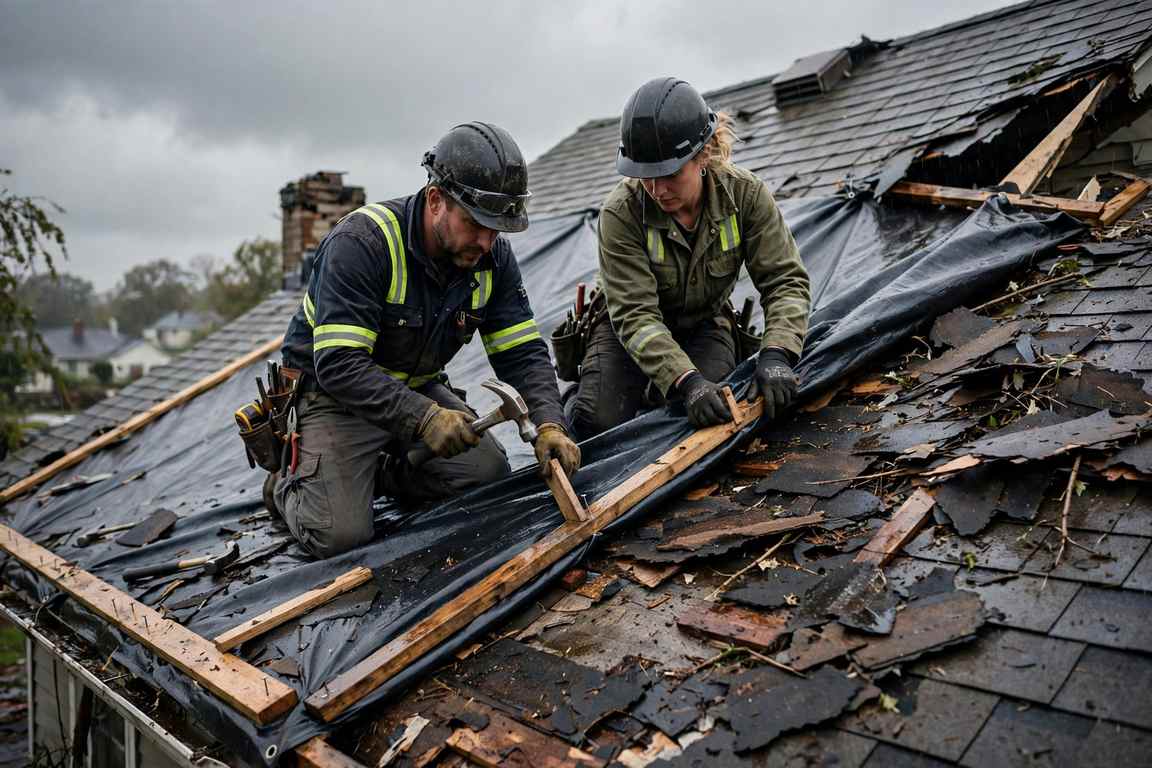
Shingles in the yard, a limb on the roof, hail marks on the car. If the roof is open anywhere, tarping comes first to keep the rain out. The storm damage page then covers the full check, slope by slope, once the weather clears.
A stain with no drip. A few shingles down and a clear sky. Something that might be nothing. The guide walks through the same test our crews use on the phone, so you can tell a tonight problem from a morning one.
Still torn between two panels? That usually means the problem is real and the label is not. Pick the one that matches the water, not the weather: if it is wet inside the house, start with the emergency and leak pages, whatever the sky did to cause it.
The services
Five core pages cover almost every call we take. Each one is written the way the work is done: problem first, method second, proof always.
The front door of this site, and the page most people need at 2 a.m. Emergency repair is the same-day work that stops water getting in: the open spot covered, the leak sealed, the roof made weather-tight until the full repair can be done properly.
That page carries the first-hour steps, the call now or wait test our crews use on the phone, and the Repair-First Promise: most emergency calls end with a repair, not a new roof, and you will see the photos that prove which one yours is.
When you call, expect questions before promises. Where is the water? Is it near lights or wiring? Can you see the sky through the roof? Your answers load the right gear before the truck rolls: tarp sizes, ladders, patch material. And if the answers say it can wait for morning, we will tell you that instead, and book it in daylight. Nothing about the call signs you up for anything. It sorts the problem, that is all. Keep your photos from the first hour with the visit notes: together they are the record of what happened and what was done about it.
Texas storms do three kinds of harm: wind lifts and tears, hail bruises the shingle mat where you cannot see it, and limbs come down where they please. This page covers the full check that follows a storm, ridge to gutters, including the damage that hides.
It also covers the part nobody enjoys: the door knockers who arrive with the clouds. You will find the questions that sort a real roofer from a storm chaser, and why nothing should be signed on the doorstep while the yard is still wet.
The first days after a storm matter more than most people think. Photograph everything before you clean up: shingles in the yard, grit washed into the gutters, the limb where it landed. Storm damage has a date on it, and photos taken that week are worth more than a memory described a month later. Do not let anyone talk you into clearing the evidence before it is recorded. And stay off the roof while it is wet, whoever suggests the climb. A storm-loosened roof is at its most dangerous in the first days, exactly when everyone wants to be on it.
A tarp is not a repair. It is a bridge: fitted flat, tight and battened down, it keeps the rain out for about 30 to 90 days while the real repair is booked and the roof dries. Fitted badly, it is a sail that takes shingles with it in the next wind.
This is the page none of our competitors has. It explains how a tarp should be sized and fixed, why some crews fit tarps far bigger than the damage, and how to check yours from the ground after every storm without climbing anything.
Once a tarp is up, your part is small and it matters. After every hard wind, look at it from the ground: edges lifted, corners flapping, water pooling in a sag. A tarp that moved needs a visit before the next rain, not after it. Texas sun is the other enemy. Even a good sheet ages fast under it, which is why the 30 to 90 day window is a window, not a suggestion. If the cover starts looking tired, stiff, faded, or loud in the wind, call it in. A refit is a small visit. A failed tarp in a storm is not.
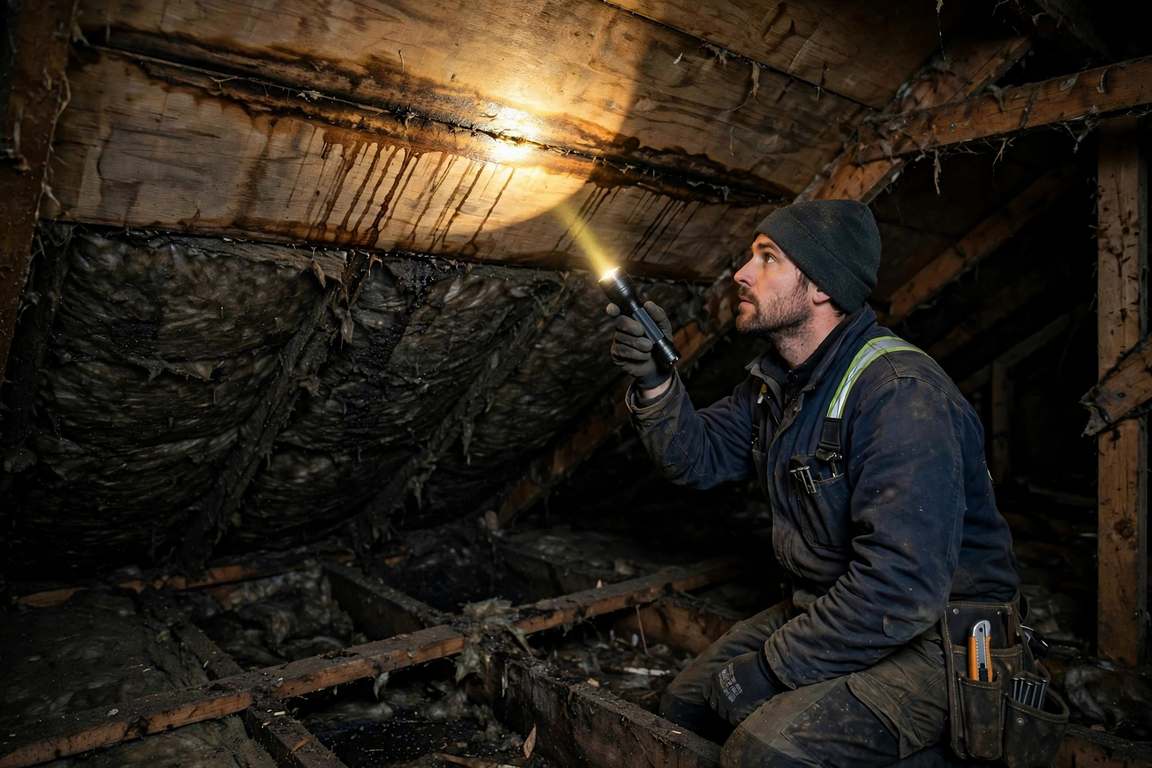
The stain on your ceiling is almost never under the hole. Water gets in high, at a cracked pipe boot or a lifted flashing, then runs along the boards, sometimes eight feet or more, before it drips. Fixing the stain fixes nothing. This page is about finding the real entry point.
It walks through the tracing method step by step: attic signs first, then the two-person hose test, section by section, until the entry point is proven. Most leaks begin at one failed part, and one failed part is a repair, not a roof.
The timing of a drip is a clue worth telling us. A leak that only shows in hard rain points at a joint that fails when water runs deep. One that shows hours after the rain stops has travelled a long way through the roof. And a drip that runs when no rain has fallen at all is often not the roof at all: it can be a plumbing line or an air drain in the attic. The pattern cuts the search in half before anyone climbs. Write down when you see it, not just where. It is the detail callers forget and crews ask for first.
Not a service, but the page that helps you choose one. The guide answers the question in its name in plain words, then works through the grey cases one by one: hail with no leak, a limb resting but not through, a drip that only shows in hard rain.
It also covers the first 24 hours after something goes wrong, hour by hour, including the ceiling bulge decision and the photos worth taking before anyone arrives. Read it on a calm day and you will be ready on a bad night.
The guide earns its keep twice. On a bad night it is a checklist: power, bucket, bulge, photos, call. On a calm day it is a rehearsal, the thing that turns a 2 a.m. surprise into a problem you have already thought through once. New homeowners get the most from it, but anyone whose roof has never been tested by a Texas storm is in the same place. It takes about five minutes to read, and it asks nothing of you but a torch and a bucket kept where you can find them.
Know your roof
The services do not change with the roof. The details do. Here is how each kind of roof bends the work:
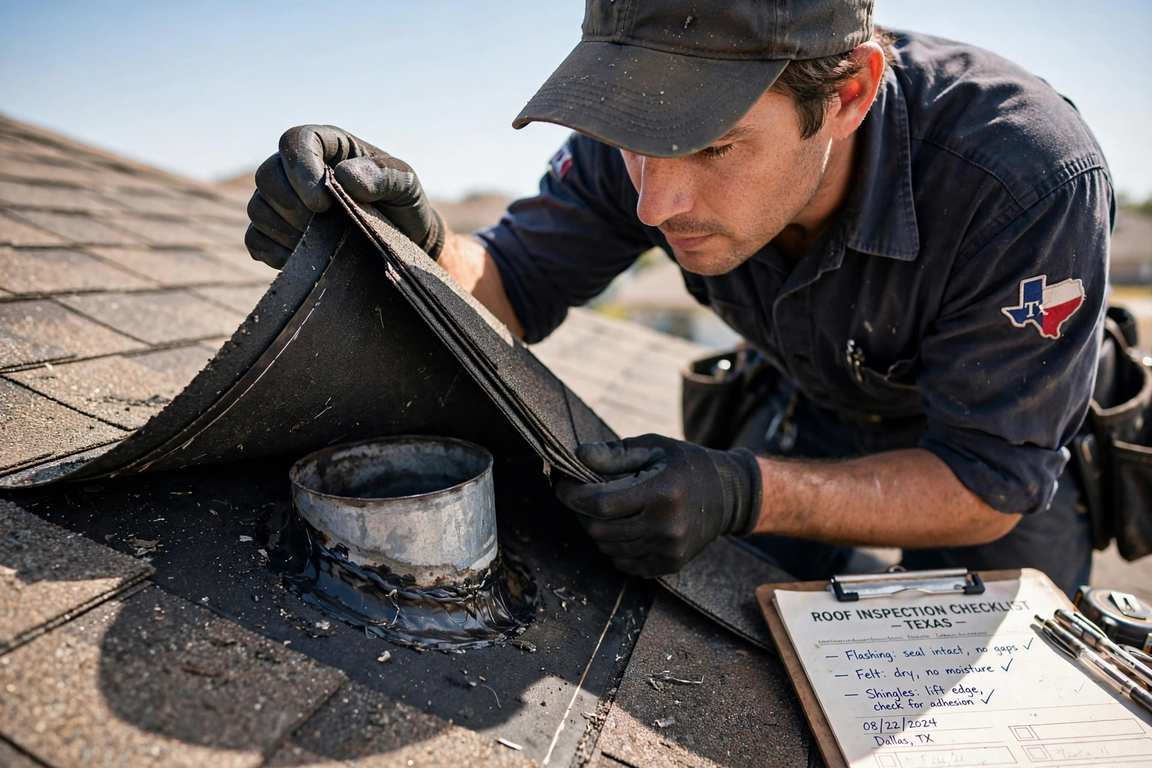
The common Texas roof. It fails at its parts: boots, flashing, valleys, and shingles a storm lifts or tears. Damage is usually local, so repairs usually are too. One slope can be torn while the rest of the roof is sound. The trap is the lifted shingle that settles back and hides. A shingle roof can look fine from the street and still be open at the seams, which is why the storm check lifts edges instead of just looking at them.
Metal sheds water fast and shrugs off hail that bruises shingles, but it leaks at its seams and screws, as heat cycles loosen them over the years. Emergency work on metal is sealing and securing, done carefully so the fix does not dent or scar the panels. The first sign is often a slow drip that only shows in driven rain, long before any panel looks wrong. Tracing matters more here, not less, because the seams hide their failures well.
Tile is a shield over the real waterproof layer, the felt beneath it. When the felt ages out, or a tile slides and cracks it, water runs under a roof that still looks perfect from the road. Lifting and resetting heavy pieces without breaking their neighbours is skilled work, and it is never a job for a borrowed ladder. That is why tile leaks are traced from the attic first, where the felt tells the truth.
Flat roofs pond water, so a small split in the surface can drink rain for hours and drop it far from the hole, through a ceiling two rooms away. Covers work differently here too: a loose tarp on a pond is a pond with a lid. If a puddle is still standing a day after the rain, the roof is telling you its slope or its drain has failed. That warning belongs on the inspection list even when nothing has dripped yet.
What nobody else has
When we read every roofing site we compete with, two things were missing from all of them. Nobody had a standalone tarping page, even though tarping questions are some of the most searched in this trade. And nobody had a page that helps you decide between repairing a roof and replacing it, even though that is the decision homeowners lose the most sleep over.
The tarping page is live and linked above. The repair or replace page is live too, and it is built on evidence you can check yourself: the age of the roof, how many slopes are failing, and whether the same leak keeps coming back. No pressure either way. That is the point of it.
The full list
Each of these has its own full page now, written the same way as the core ones above. Open the one that matches your problem, or call (512) 555-0147 and describe what you see.
The general repair page: torn shingles, split flashing, tired pipe boots, small sections that have given up before the rest of the roof. The everyday work that keeps a sound roof sound.
A full check of the roof with photos: every slope, every flashing, the attic side too. You get the pictures and a plain list of what is fine, what to watch, and what needs work.
The decision page described above. A framework for the hardest call in roofing, built on signs you can see yourself, so the answer comes from the roof and not from a sales target.
Hail bruises shingles from the inside, and the damage shows up months later as lost grit and early wear. This page covers how hail harm is found, marked and proven, slope by slope.
When a roof truly is worn out, this page covers how a replacement runs: what comes off, what goes on, and how the work is staged so the house is never left open to the weather.
That is what the phone is for. Describe what you see, and we will tell you plainly which service fits, or that none does yet. One number covers the whole page: (512) 555-0147.
How we work
Whichever page you came from, the visit itself runs in the same four steps:
The first job is not the repair. It is the rain. We cover, seal and make the roof weather-tight so the house stops taking damage.
Loose material comes down, hazards get dealt with, and nobody works under a damaged section.
Photos of what failed and what we did about it, explained in plain words while we are still there.
Once the roof is dry and checked, the real fix, written out as a scope before it starts.
That order is the same on a tarping call at midnight and a leak trace on a quiet Tuesday. It is how you know the visit was run for your roof, not for a sales target.
Service areas
Every service on this page runs in the towns our crews live in: Austin, Buda, Pilot Point and Plano, each with its own page and its own local details. Because the crews start from these towns, the gear, the ladders and the local knowledge of each area's roofs start there too. Your town not listed? Call (512) 555-0147. If we cannot get to you in time, we will tell you plainly rather than leave you waiting on a promise.
Questions
The questions callers ask when they are not sure where they fit:
Start with the problem, not the service name. Water coming in now means the emergency page. A storm in the last few days means storm damage or tarping. A stain that keeps coming back means leak repair. Still torn between two? Call (512) 555-0147 and describe what you see.
Leak repair. Most leaks have nothing to do with storms: a pipe boot cracks in the Texas heat, a flashing splits, a valley opens up. The leak page explains how we trace the water back to the real entry point, because the stain is rarely where the water gets in.
Often both, in that order. If any part of the roof is open, tarping comes first to keep the rain out tonight. Once the weather clears, the storm damage check goes over the whole roof, slope by slope, and the lasting repair is scoped from what it finds.
Yes, and it happens all the time. A storm visit often starts with a tarp and ends with a leak trace. The order stays the same: stop the water, make it safe, show you the proof, then repair. You will always know which part of the visit you are in.
Read the guide first. It runs the same test our crews use on the phone: water getting in now, a bulging ceiling, a tree down, or drips near wiring means call tonight. A dry stain and a clear sky can wait for morning. The guide settles it in five minutes.
Small jobs are welcome here. One cracked pipe boot is a real job, and most leaks trace back to a single failed part just like it. We would rather fix one boot properly than talk you into work your roof does not need. The photos will show you exactly what was done.
Water does not wait, and neither should you.
One number covers every service on this page, at any hour of the day or night.
(512) 555-0147